Selecting the best event company is a strategic decision that directly impacts brand reputation, stakeholder confidence, and return on investment. In 2026, the landscape has shifted from simple vendor relationships to integrated production partnerships where technical capability, strategic thinking, and operational discipline determine success. Organizations now require partners who deliver measurable outcomes through comprehensive planning, budget control, and execution intelligence.
Strategic Criteria for Partner Selection
The best event company distinguishes itself through verifiable production capabilities rather than marketing promises. Production intelligence encompasses technical planning, supplier coordination, risk mitigation protocols, and post-event analysis systems that transform brand experiences from concepts into operational reality.
Technical Infrastructure Assessment
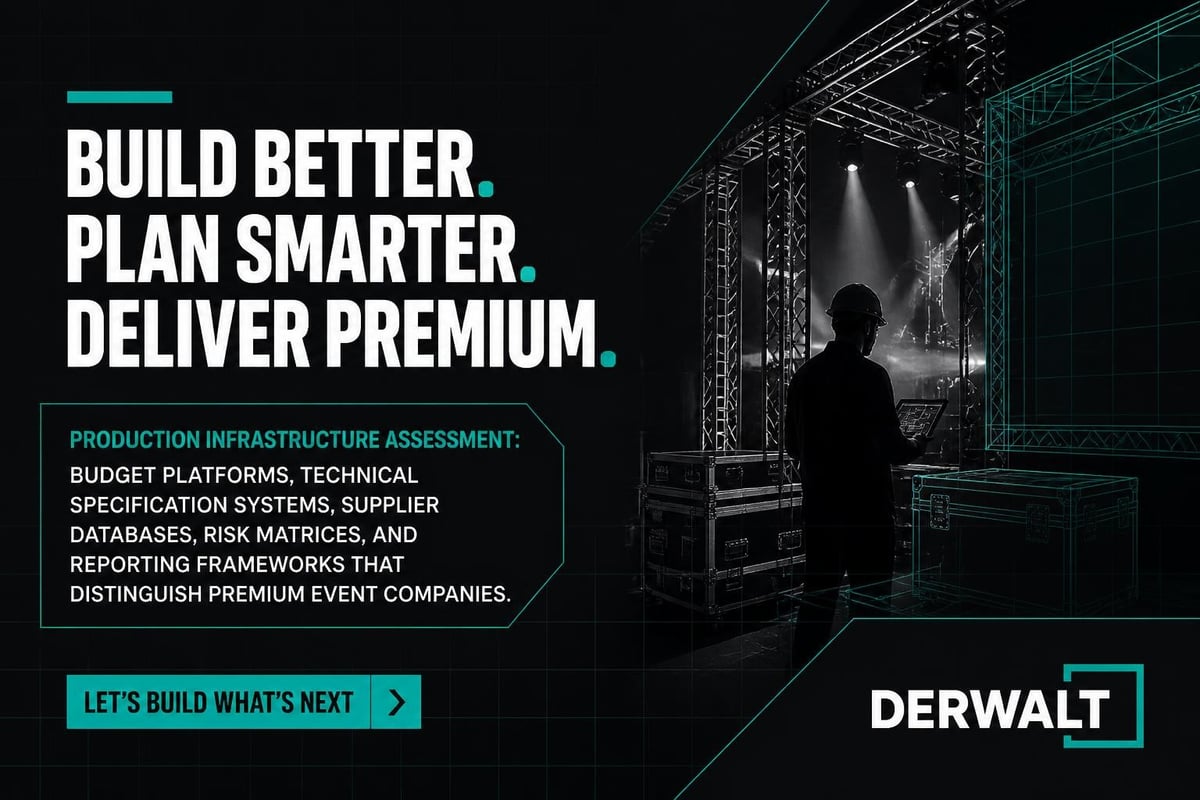
Evaluating technical infrastructure reveals operational maturity. Leading production partners maintain proprietary systems for project management, budget tracking, technical specification documentation, and real-time communication protocols. These systems ensure accountability across every project phase.
Core infrastructure components include:
- Integrated budget management platforms with real-time cost tracking
- Technical specification libraries for venue requirements and equipment standards
- Supplier qualification frameworks and performance databases
- Risk assessment matrices covering health, safety, security, and contingency planning
- Post-event reporting templates with measurable outcome analysis
Organizations should request evidence of these systems during partner evaluation. The best event company provides transparent access to methodologies that protect client investments and reduce execution risk.
Production Track Record Analysis
Past performance predicts future delivery. Request detailed case studies that demonstrate complexity management, not just aesthetic outcomes. According to event management best practices, successful partners document challenges faced, solutions implemented, and measurable results achieved across diverse project types.
| Evaluation Category | Assessment Criteria | Documentation Required |
|---|---|---|
| Budget Management | Cost control accuracy, variance reporting | Final reconciliation reports |
| Technical Delivery | Equipment uptime, technical issue resolution | Performance metrics, incident logs |
| Timeline Adherence | Milestone completion rates, delay management | Project schedules, variance analysis |
| Stakeholder Management | Communication protocols, approval processes | Client testimonials, reference contacts |
The best event company provides quantified evidence across these categories. Testimonials matter, but operational data reveals true capability.
Operational Excellence Markers
Operational discipline separates strategic partners from transactional suppliers. Premium production companies implement standardized processes that ensure consistency regardless of project scale or complexity.
Budget Control Systems
Financial predictability is non-negotiable in corporate event production. The best event company employs multi-tiered budget approval processes, real-time tracking systems, and transparent reporting that provides visibility into every cost line item.
Essential budget control features:
- Preliminary estimation with contingency allocation based on historical data
- Detailed line-item budgeting with supplier quotation documentation
- Approval gateway systems requiring sign-off at predetermined thresholds
- Real-time variance monitoring with automated alerts for cost deviations
- Final reconciliation reporting with lessons learned documentation
These systems protect organizations from budget overruns and create accountability frameworks that support financial planning. When evaluating partners, request examples of budget documentation and variance management from previous projects.
Risk Mitigation Protocols
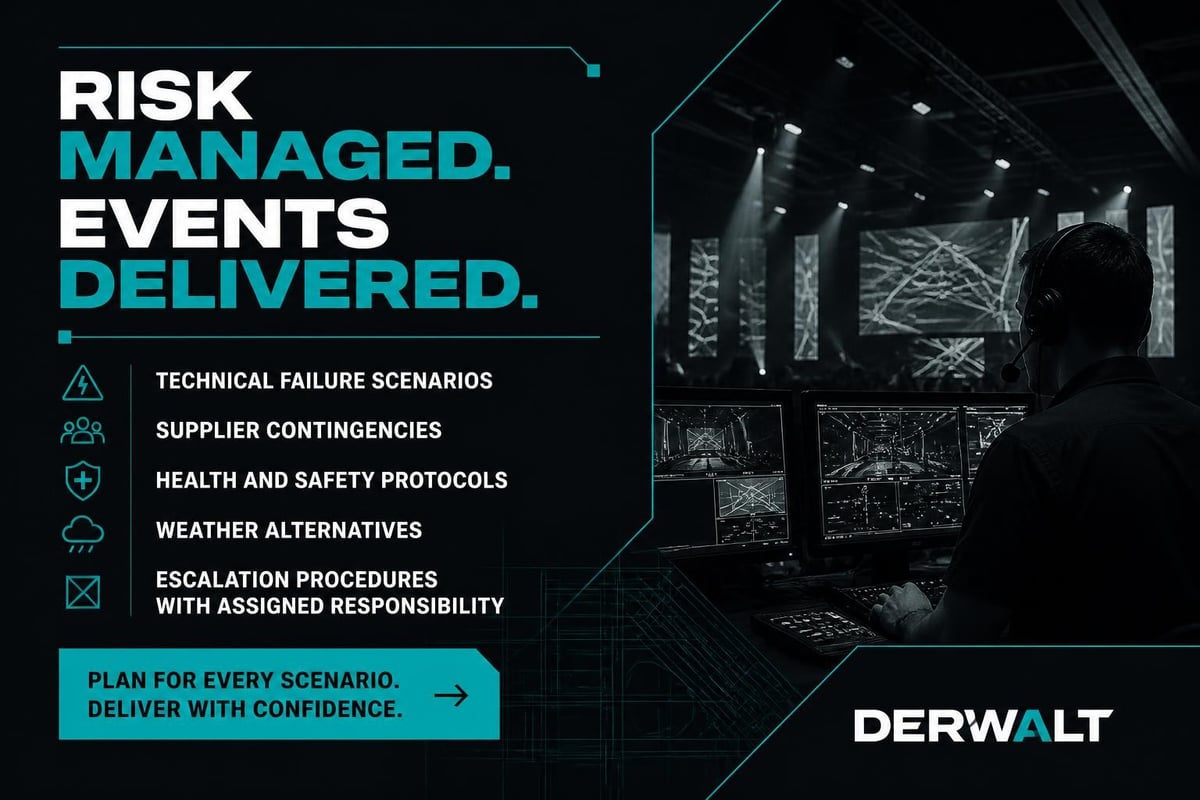
Comprehensive risk assessment distinguishes professional production partners from reactive service providers. Understanding event production best practices reveals that proactive risk management covers technical failures, supplier defaults, weather contingencies, health and safety compliance, and reputational exposure.
The best event company maintains documented risk registers that identify potential failure points, assign probability ratings, establish mitigation strategies, and define escalation protocols. These living documents evolve throughout the project lifecycle and inform contingency planning decisions.
Before engaging any partner, review their risk assessment methodology. Professional organizations provide templated examples that demonstrate systematic thinking rather than improvised responses to emerging challenges.
Strategic Capability Evaluation
Beyond operational competence, the best event company contributes strategic value through creative interpretation, audience insight, and brand experience design that aligns with business objectives.
Creative and Strategic Integration
Production capability without strategic thinking delivers technically sound but commercially ineffective events. Premium partners bridge this gap by integrating creative teams with production specialists from project inception. This approach ensures feasibility analysis informs creative development rather than creative concepts being compromised during execution planning.
Organizations should evaluate how potential partners structure their teams. The best event company assigns both creative strategists and production managers to every project, ensuring continuous dialogue between vision and operational reality. This integration prevents costly redesigns and timeline delays caused by late-stage feasibility challenges.
Audience Experience Engineering
Understanding audience needs transforms generic events into memorable brand experiences. Strategic partners conduct stakeholder mapping, define experience objectives, and design engagement journeys that align with broader marketing and communication strategies. This audience-centric approach ensures every production decision serves measurable engagement goals.
Request examples of audience journey mapping from prospective partners. Documentation should demonstrate how attendee touchpoints connect to brand messaging, how engagement is measured, and how feedback informs continuous improvement. When comparing live event production companies, prioritize those who discuss audience outcomes as frequently as technical specifications.
Supplier Ecosystem Management
No production company operates in isolation. The best event company curates and manages supplier networks that deliver specialized capabilities while maintaining quality standards and cost efficiency.
Vendor Qualification Frameworks
Professional production partners implement formal supplier qualification processes that assess financial stability, technical capability, safety compliance, insurance coverage, and performance history. These frameworks protect clients from subcontractor failures that compromise event delivery.
Supplier evaluation criteria include:
- Proof of insurance and safety certifications
- Technical capability demonstrations and equipment inventories
- Client reference verification with performance documentation
- Financial stability assessment to ensure contract fulfillment
- Quality assurance processes and performance guarantees
The best event company provides transparency into their supplier network and qualification standards. This visibility ensures clients understand who will deliver critical services and how quality will be maintained throughout the supply chain.
Supplier Performance Management
Ongoing supplier management ensures consistent delivery across multiple projects. Leading production partners maintain performance databases that track vendor reliability, quality metrics, responsiveness, and cost competitiveness. These data-driven systems inform supplier selection and create accountability frameworks that protect client interests.
| Supplier Category | Performance Metrics | Review Frequency | Corrective Actions |
|---|---|---|---|
| Audio/Visual | Equipment uptime, technical support responsiveness | Per project | Performance improvement plans, supplier replacement |
| Logistics | Delivery accuracy, damage rates, timeline adherence | Per project | Process refinement, alternative supplier evaluation |
| Catering | Food quality scores, service standards, dietary compliance | Per event | Menu adjustments, service protocol updates |
| Venue Services | Facility condition, staff cooperation, contract compliance | Per venue | Venue relationship management, contract renegotiation |
Request access to supplier performance data during partner evaluation. Transparency in this area demonstrates operational maturity and client-focused accountability.
Technical Planning Discipline
Technical planning transforms creative concepts into executable production blueprints. The best event company employs systematic planning processes that document every technical requirement, identify dependencies, and establish verification protocols that prevent execution failures.
Specification Documentation
Comprehensive technical specifications eliminate ambiguity and create contractual clarity. Professional partners produce detailed documentation covering power requirements, load-bearing calculations, internet connectivity specifications, acoustic requirements, lighting plans, and equipment schedules. Following event best practices ensures these specifications align with venue capabilities and regulatory compliance.
Documentation quality directly correlates with execution success. The best event company provides specification packages that suppliers can quote accurately and venues can approve efficiently, reducing timeline friction and preventing costly on-site modifications.
Pre-Event Technical Verification
Site inspections, load-in rehearsals, and technical run-throughs identify potential failures before stakeholders arrive. Leading production partners schedule comprehensive pre-event verification that tests every technical system under operational conditions.
Pre-event verification checklist:
- Power distribution testing with full load simulation
- Audio system sound checks across all venue zones
- Lighting programming review with timing verification
- Video content playback testing on all display systems
- Internet connectivity stress testing with expected user loads
- Emergency egress verification and safety system functionality
Organizations should confirm that potential partners include verification time in project schedules. The best event company builds buffer periods specifically for technical testing rather than treating verification as optional or schedule-dependent.
DERWALT does not simply build events but constructs the system behind successful brand experiences. This comprehensive approach ensures that production intelligence encompasses creative interpretation, strategic planning, budget control, technical delivery, supplier management, risk mitigation, on-site execution, and post-event learning.
Execution Management Standards
On-site execution reveals operational discipline under pressure. The best event company maintains command-and-control systems that coordinate multiple supplier teams, manage real-time problem resolution, and ensure stakeholder communication throughout live delivery.
Command Structure Implementation
Professional production management establishes clear authority hierarchies with defined decision-making protocols. Command structures typically include production directors overseeing technical operations, client liaison managers maintaining stakeholder communication, and specialist coordinators managing distinct operational areas such as audio/visual, logistics, catering, and security.
This organizational clarity prevents confusion during high-pressure situations and ensures rapid response when issues emerge. When evaluating partners, request organizational charts for similar past projects that demonstrate how teams are structured and how communication flows during execution.
Real-Time Problem Resolution
Despite comprehensive planning, live events generate unexpected challenges. The best event company distinguishes itself through systematic problem resolution that balances immediate solutions with stakeholder communication and post-event analysis.
Problem resolution protocols should include incident classification systems that determine escalation triggers, communication templates that inform stakeholders without creating unnecessary alarm, and documentation requirements that capture lessons for future projects. Understanding how event experiences are protected through crisis management reveals partner maturity.
Measurement and Continuous Improvement
Post-event analysis transforms individual projects into institutional knowledge that improves future delivery. The best event company implements structured evaluation processes that capture quantitative performance data and qualitative stakeholder feedback.
Performance Metrics Collection
Measurable outcomes justify event investments and inform strategic decisions. Professional partners define success metrics during project planning, establish measurement methodologies, and deliver comprehensive reporting that links event activities to business objectives.
Standard performance categories include:
- Attendance metrics: Registration conversion, actual attendance, audience demographic analysis
- Engagement metrics: Session participation rates, interaction touchpoint usage, content download volumes
- Technical performance: System uptime percentages, issue resolution times, equipment failure rates
- Financial performance: Budget variance analysis, cost-per-attendee calculations, ROI measurements
- Stakeholder satisfaction: Net promoter scores, testimonial collection, repeat engagement rates
The best event company provides templated reporting frameworks that can be customized to specific client requirements. This standardization ensures consistent data collection across multiple events while allowing flexibility for unique business objectives.
Lessons Learned Documentation
Capturing institutional knowledge prevents repeated mistakes and accelerates continuous improvement. According to B2B event content best practices, systematic post-event debriefs with documented insights create competitive advantages over time.
Professional partners conduct structured debrief sessions involving client stakeholders, production teams, and key suppliers. These sessions identify what worked well, what requires improvement, and what should be discontinued in future projects. Documentation from these sessions informs proposal development, planning processes, and risk assessment for subsequent events.
Request examples of lessons learned reports from prospective partners. Quality documentation demonstrates commitment to improvement rather than defensive justification of past decisions.
Integration with Broader Marketing Strategy
Events do not exist in isolation but function as components within integrated marketing ecosystems. The best event company understands how live experiences connect to digital campaigns, content marketing, sales enablement, and customer relationship management.
Multi-Channel Experience Design
Strategic partners design event experiences that generate content assets, social media engagement, lead generation data, and relationship touchpoints that extend beyond the physical event timeframe. This approach maximizes return on event investment by creating ongoing value rather than ephemeral experiences.
Organizations should evaluate how potential partners think about pre-event engagement, live-event amplification, and post-event content distribution. The best event company proposes integrated activation strategies that leverage experiential marketing across multiple channels rather than focusing exclusively on physical delivery.
Data Capture and Utilization
Events generate valuable first-party data when proper capture systems are implemented. Professional production partners integrate registration platforms, engagement tracking tools, and CRM systems that transform attendee interactions into actionable business intelligence. Learning how to leverage event attendee data creates competitive advantages that justify event investments.
The best event company collaborates with marketing technology teams to ensure data flows seamlessly from event platforms into broader marketing automation systems, enabling personalized follow-up and long-term relationship nurturing.
Financial Transparency and Contract Structure
Contract terms reveal partner priorities and protect organizational interests. The best event company structures agreements that balance risk appropriately, define scope clearly, establish payment schedules fairly, and provide transparency into cost structures.
Scope Definition Precision
Ambiguous scope statements generate conflict and budget disputes. Professional partners invest significant effort in scope documentation that defines deliverables, exclusions, approval processes, change order protocols, and performance standards with contractual precision.
Organizations should insist on detailed scope documentation before contract execution. The best event company welcomes this rigor because clear expectations protect both parties and enable focused execution without scope creep or misaligned expectations.
Payment Structure Alignment
Payment schedules should align with project milestones and protect client interests while enabling supplier cash flow for deposit requirements. Professional structures typically include deposits for initial planning, progress payments tied to milestone completion, and final payments contingent on successful delivery and issue resolution.
The best event company proposes payment terms that demonstrate confidence in delivery rather than front-loading fees that create financial exposure for clients. Reviewing event management company credentials provides insight into financial stability and operational maturity.
Regional Considerations and Local Expertise
Geographic context influences supplier availability, regulatory requirements, logistical complexity, and cost structures. The best event company demonstrates deep local market knowledge while maintaining operational standards that ensure consistency across multiple locations.
Regulatory Compliance Knowledge
Local regulations covering safety, permits, alcohol service, noise restrictions, and accessibility requirements vary significantly by jurisdiction. Professional partners maintain current knowledge of applicable regulations and build compliance requirements into planning processes rather than treating them as last-minute obstacles.
Organizations should verify that potential partners understand specific regulatory environments where events will occur. The best event company proactively addresses compliance during proposal development and builds verification processes into project schedules.
Supplier Network Depth
Regional supplier relationships influence cost competitiveness, equipment availability, and execution reliability. Partners with established local networks negotiate better rates, access specialized capabilities, and resolve issues more efficiently than organizations operating in unfamiliar markets.
Request information about local supplier relationships when evaluating partners for regional events. The best event company provides evidence of established partnerships rather than relying on ad-hoc supplier sourcing that introduces unnecessary risk.
Identifying the best event company requires systematic evaluation of production capabilities, operational discipline, strategic thinking, and execution track record. Organizations that prioritize these criteria over superficial factors create partnerships that deliver measurable brand experiences with financial predictability and reduced risk. DERWALT specializes in production intelligence that bridges creative vision with operational excellence, delivering comprehensive event solutions across South Africa through systematic planning, technical expertise, and execution discipline that transforms brand experiences into strategic business assets.
Recent Comments