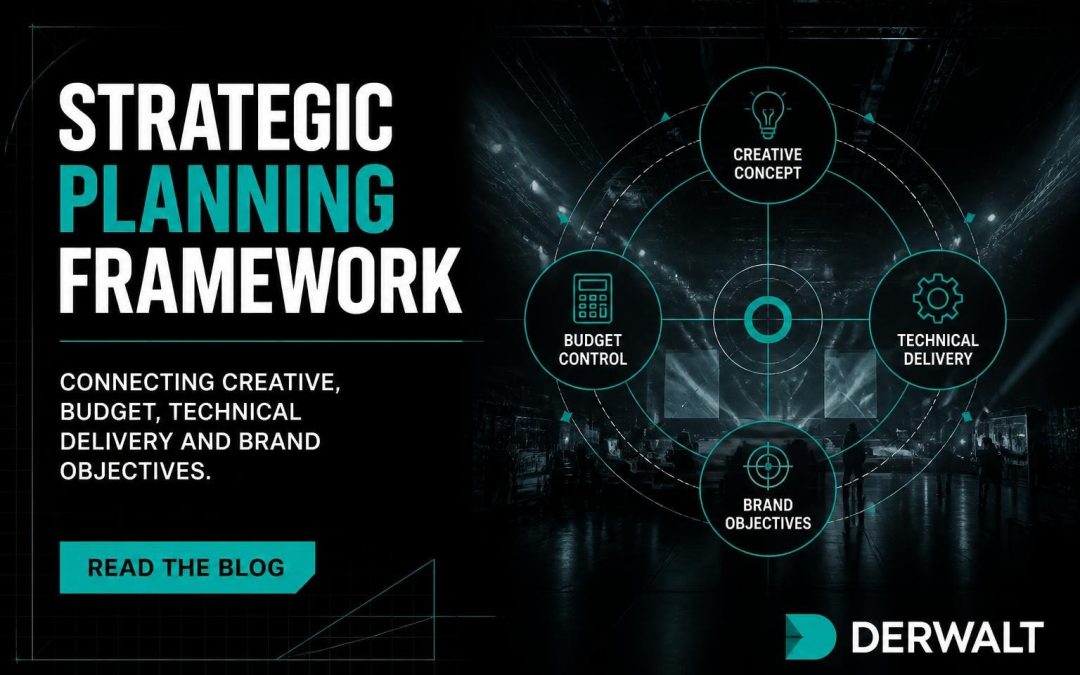
Planning a special event demands more than enthusiasm and a checklist. It requires production intelligence, strategic alignment, and operational precision. Whether launching a product, celebrating a corporate milestone, or activating a brand in the marketplace, a special event represents a significant investment in reputation, stakeholder relationships, and business outcomes. The difference between an event that generates genuine impact and one that merely consumes budget lies in how production, creative vision, and technical delivery converge under expert management.
Strategic Foundation: Defining What Makes A Special Event
A special event distinguishes itself through purpose, scale, and complexity. Unlike routine gatherings, these occasions carry heightened expectations from stakeholders, attendees, and brand guardians. They demand customized solutions rather than template execution.
Clear Objectives Drive Production Decisions
Every element of a special event should trace back to measurable business objectives. Brand launches require different technical infrastructure than award ceremonies. Corporate anniversaries demand distinct creative approaches compared to experiential activations. Defining these objectives early establishes the framework for budget allocation, supplier selection, and risk assessment.
Key objective categories include:
- Brand awareness and market positioning
- Stakeholder relationship development
- Product or service introduction
- Employee engagement and culture building
- Industry thought leadership establishment
- Revenue generation through direct sales or sponsorship
Strategic planning begins with understanding who must attend, what message they need to receive, and how success will be measured. This clarity informs every subsequent production decision, from venue selection to post-event analysis.
Budget Control as Production Intelligence
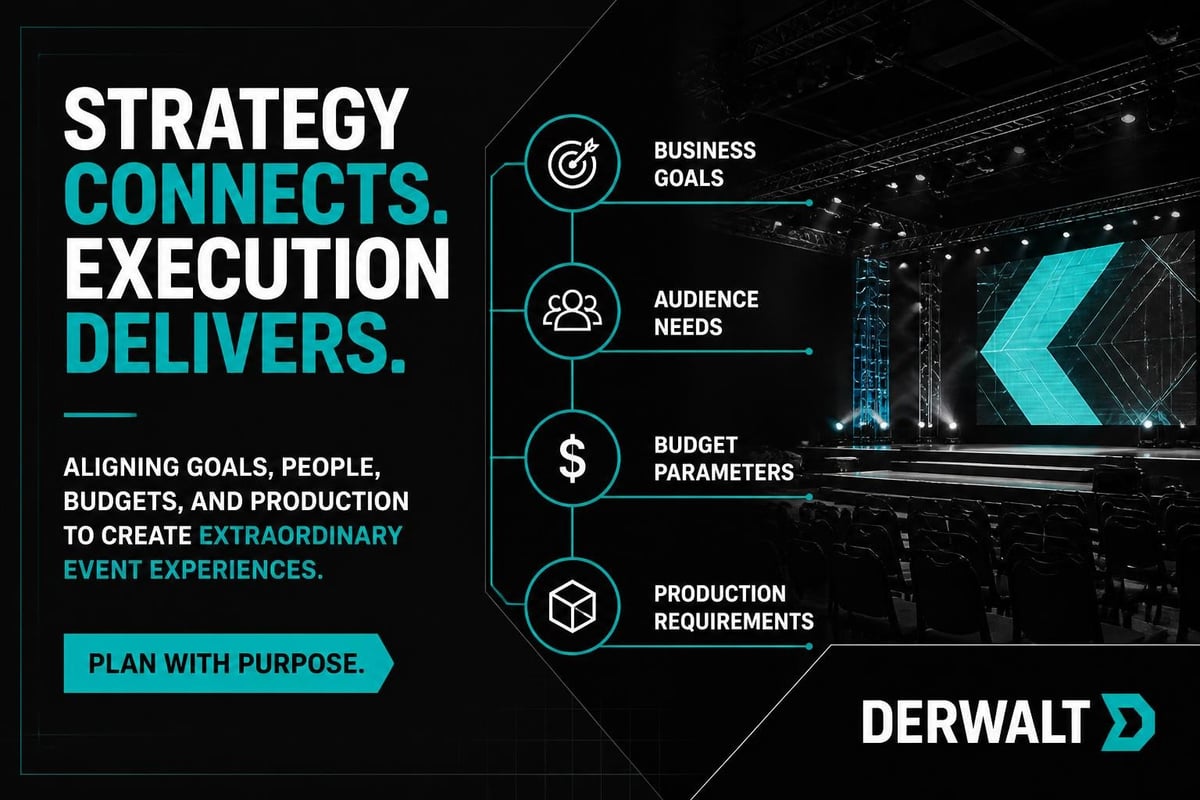
Financial management separates successful special events from costly disappointments. A comprehensive budget encompasses far more than venue hire and catering. Production elements, technical requirements, supplier margins, contingency reserves, and hidden costs must receive systematic attention.
| Budget Category | Typical Allocation | Key Considerations |
|---|---|---|
| Venue & Infrastructure | 25-35% | Access times, power capacity, load-in restrictions |
| Technical Production | 20-30% | Audio, video, lighting, rigging, staging |
| Creative & Content | 15-25% | Design, fabrication, media production, talent |
| Logistics & Operations | 10-15% | Transport, storage, crew, equipment rental |
| Contingency Reserve | 10-15% | Weather, technical failure, scope changes |
According to event management market analysis, the global event industry continues expanding, with increased investment in experiential marketing driving demand for sophisticated production capabilities. This growth intensifies competition for premium suppliers and venues, making early booking and negotiation essential for budget protection.
Production Timeline: From Concept to Execution
A special event requires months of preparation, not weeks. Production timelines vary based on scale, but strategic milestones remain consistent across event types.
Six to Twelve Months Before Event
Conceptualization and strategic planning dominate this phase. Identifying the core creative concept, securing the venue, and establishing supplier relationships create the foundation for successful execution. Major technical elements require long lead times, particularly custom fabrication, AV equipment procurement, and talent booking.
Venue selection criteria extend beyond capacity and location. Load-in access, power distribution, rigging points, backup generator capacity, and noise restrictions impact production feasibility. A venue that appears perfect for attendee experience may present insurmountable technical challenges that inflate costs or compromise delivery.
Three to Six Months Before Event
Detailed planning translates concepts into specifications. Technical drawings, supplier contracts, risk assessments, and contingency protocols take shape during this period. Event planning best practices emphasize the importance of detailed roadmaps that account for dependencies between production elements.
Critical deliverables in this phase:
- Finalized floor plans with technical overlays
- Confirmed supplier contracts with performance guarantees
- Detailed run sheets with timing sequences
- Health, safety, and security protocols
- Communication plans for stakeholders and crew
- Backup systems for critical technical elements
Production meetings transition from strategic discussions to operational coordination. Every supplier must understand their role within the broader production ecosystem and how their deliverables integrate with others.
Final Month: Technical Planning and Rehearsal
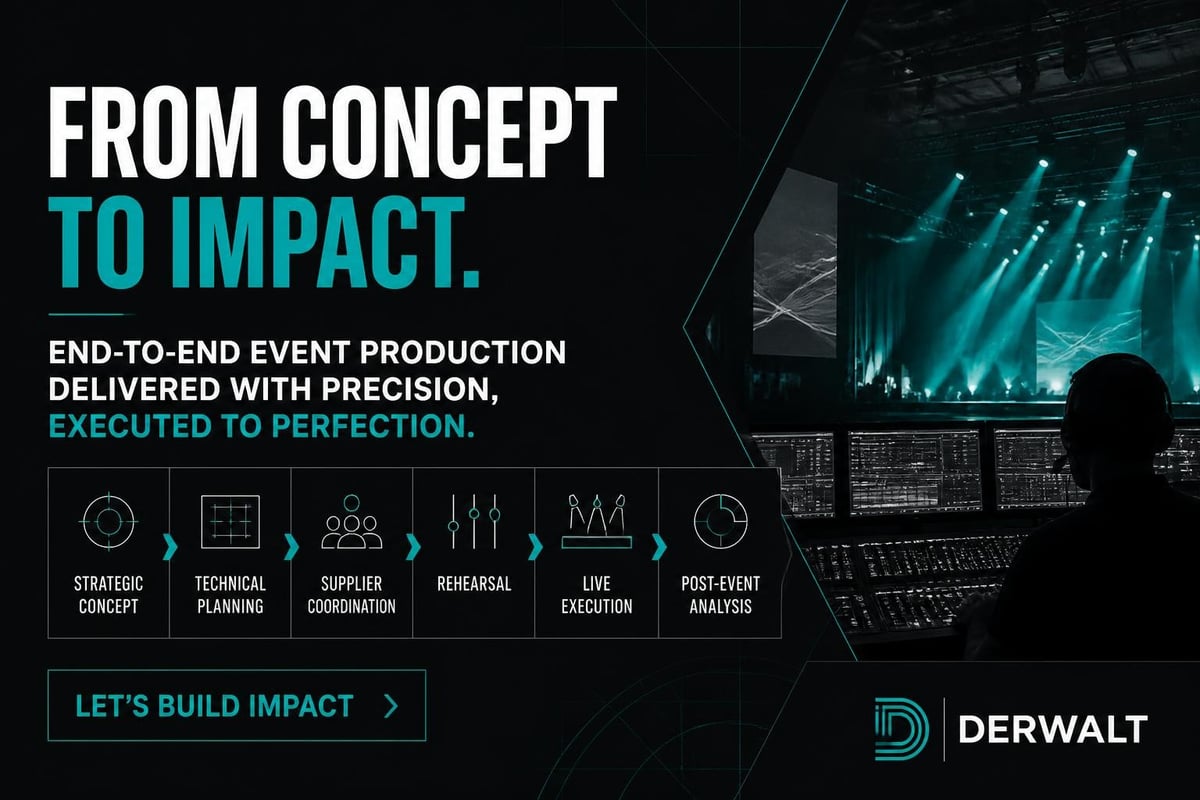
Technical precision determines whether a special event achieves its objectives or suffers visible failures. Audio systems, video displays, lighting cues, stage automation, and network infrastructure must function flawlessly under pressure. The comprehensive approach to live event production that professional firms deliver becomes especially valuable during this critical phase.
Rehearsals expose integration issues that specification reviews miss. Testing transitions between program segments, validating backup systems, and confirming communication protocols under realistic conditions identifies vulnerabilities before stakeholders arrive. Load-in scheduling must account for interdependencies, ensuring rigging completes before lighting hangs, power distribution precedes AV installation, and testing occurs before scenic elements obstruct access.
Creative Differentiation: Making A Special Event Memorable
Creative excellence distinguishes memorable experiences from forgettable gatherings. While production infrastructure enables delivery, creative interpretation gives a special event its distinctive character and emotional resonance.
Thematic Coherence Across Touchpoints
Every attendee interaction contributes to overall brand perception. From invitation design through post-event communications, thematic consistency reinforces key messages and strengthens recall. Visual identity systems, branded environments, content narratives, and experiential activations should express a unified creative vision rather than disconnected elements.
Technology enables increasingly sophisticated creative expression. Interactive displays, augmented reality experiences, projection mapping, and synchronized multi-sensory environments create immersive brand encounters. However, technology serves creative objectives rather than replacing them. The most effective special events balance innovation with intuitive user experiences that don't require extensive explanation.
DERWALT builds the system behind successful brand experiences through production intelligence that connects creative interpretation with strategic planning, technical delivery, and budget control. This integrated approach ensures creative ambitions translate into flawless execution rather than compromised compromises.
Engagement Architecture Beyond Passive Attendance
A special event should prompt active participation rather than passive observation. Engagement architecture considers how attendees move through physical and digital spaces, what choices they make, and how those interactions advance event objectives.
Effective engagement strategies include:
- Structured networking formats with clear objectives
- Hands-on product demonstrations that reveal value propositions
- Gamification elements that encourage desired behaviors
- Live polling and real-time feedback collection
- Social media integration that extends reach beyond physical attendees
- Personalized content delivery based on attendee profiles
Emerging event industry trends indicate growing emphasis on data-driven engagement measurement. Attendee tracking technologies, sentiment analysis, and post-event surveys provide quantifiable insights into what worked and what requires refinement for future activations.
Technical Infrastructure: The Invisible Foundation
Outstanding technical execution remains invisible to attendees. They experience seamless transitions, perfect audio clarity, and stunning visuals without recognizing the infrastructure that enables these outcomes. Technical failure, conversely, becomes immediately visible and damages brand credibility.
Audio, Video, and Lighting Integration
Modern special events demand broadcast-quality AV capabilities regardless of venue. High-definition video displays, directional audio systems, and dynamic lighting create immersive environments that hold attention and communicate messages effectively. These systems require careful integration to avoid interference, optimize sight lines, and maintain redundancy for critical components.
| Technical System | Primary Considerations | Redundancy Requirements |
|---|---|---|
| Audio | Coverage patterns, feedback elimination, mixing capacity | Backup mixer, spare microphones, dual signal paths |
| Video | Resolution, brightness, viewing angles, content format | Backup projectors, alternate signal routing, standby content |
| Lighting | Color temperature, beam control, programming complexity | Spare fixtures, backup controllers, manual override |
| Network | Bandwidth, security, device management | Redundant internet connections, offline content cache |
Technical planning extends beyond equipment specifications to operational protocols. Who monitors systems during the event? What troubleshooting authority do technicians possess? How quickly can backup systems engage if primary components fail? Technical planning expertise addresses these questions systematically rather than reactively.
Power Distribution and Environmental Control
Inadequate power infrastructure causes more production failures than any other single factor. Special events often demand electrical capacity that exceeds standard venue provisions, requiring generator deployment, load balancing, and backup power for critical systems. Environmental control similarly impacts attendee comfort and equipment performance, particularly for outdoor or temporary structures.
Temperature, humidity, and air circulation affect both human comfort and technical reliability. Video processors overheat, batteries drain faster in cold conditions, and humidity creates condensation on lenses and connectors. Production planning must account for these environmental factors and implement mitigation strategies.
Risk Management: Protecting Investment and Reputation
A special event represents concentrated risk. Stakeholder expectations, financial investment, and brand reputation converge in a compressed timeframe with limited recovery opportunities if problems emerge. Systematic risk management identifies vulnerabilities and implements controls that reduce probability and impact.
Scenario Planning and Contingency Protocols
Effective risk management considers not only what might go wrong but also how the production team will respond. Weather disruptions, supplier failures, technical malfunctions, health emergencies, and security incidents all threaten event success. Pre-planned responses enable faster, more effective crisis management than improvised reactions.
Essential contingency elements:
- Weather backup plans with clear decision triggers
- Supplier performance guarantees and substitute arrangements
- Technical system redundancy for critical components
- Medical and security response protocols
- Communication chains for rapid stakeholder notification
- Insurance coverage appropriate to event scale and risk profile
Event planning statistics reveal that risk mitigation receives increasing attention as event complexity grows. Stakeholders recognize that comprehensive risk management protects their investment and reduces exposure to reputational damage.
Regulatory Compliance and Safety Standards
Special events must satisfy numerous regulatory requirements spanning crowd management, fire safety, electrical standards, food handling, accessibility, and noise control. Non-compliance creates legal liability and threatens event cancellation, making proactive regulatory engagement essential during planning phases.
Safety protocols extend beyond minimum compliance to duty of care principles. Attendee welfare, crew safety, and public protection drive decisions about crowd density, emergency egress, equipment rigging, and operational procedures. Professional production management integrates safety considerations throughout planning rather than treating them as isolated compliance exercises.
Supplier Management: Building the Production Ecosystem
A special event assembles a temporary organization from multiple specialized suppliers. Coordinating these diverse capabilities requires clear communication, aligned expectations, and systematic performance management.
Selection Criteria Beyond Price
Supplier selection impacts production quality, risk exposure, and operational efficiency. While budget constraints matter, choosing suppliers solely on price often proves costly through performance failures, scope disputes, or hidden charges. Evaluation criteria should balance financial considerations with capability assessment and relationship factors.
Supplier credentials worth examining include previous work examples, technical certifications, insurance coverage, financial stability, and client references. Understanding their operational capacity, backup equipment inventory, and crew experience levels reveals whether they can actually deliver what proposals promise.
Coordination and Performance Management
Once selected, suppliers require active coordination to maintain schedule, budget, and quality standards. Regular production meetings, shared documentation systems, and clear escalation protocols keep all parties aligned as planning progresses and inevitable changes occur.
Performance management begins before the event through milestone reviews and continues through load-in, rehearsal, live execution, and derig phases. Identifying and addressing performance gaps early prevents crisis situations that compromise delivery or force expensive emergency solutions.
Measurement and Learning: Closing the Intelligence Loop
A special event generates valuable data about what works, what doesn't, and how to improve future activations. Systematic measurement and analysis transform individual events into organizational learning assets that enhance subsequent planning.
Defining Success Metrics
Meaningful measurement aligns with original objectives rather than vanity metrics. Attendance numbers matter less than attendee quality. Social media mentions mean little without sentiment analysis and reach verification. Measuring what actually drives business value requires upfront agreement on key performance indicators.
Measurement categories for special events:
- Attendance and participation rates by target audience segments
- Brand perception shifts measured through pre and post surveys
- Media coverage quality, reach, and message alignment
- Lead generation and conversion rates for commercial objectives
- Stakeholder satisfaction scores from systematic feedback
- Budget performance against plan and industry benchmarks
- Safety record and incident response effectiveness
Data-driven event management enables continuous improvement cycles that enhance production efficiency, creative effectiveness, and stakeholder satisfaction over time.
Post-Event Analysis and Documentation
Formal post-event reviews capture insights while memory remains fresh and stakeholders are available. These sessions should examine what succeeded, what failed, what surprised the team, and what would change for future events. Documentation preserves institutional knowledge that prevents repeated mistakes and scales successful approaches.
Production documentation including technical drawings, supplier contracts, run sheets, and budget actuals becomes valuable reference material. Future events benefit from this documentation, reducing planning time and improving cost estimation accuracy.
Integration with Broader Marketing Strategy
A special event should reinforce broader marketing objectives rather than existing as an isolated activity. Integration with digital campaigns, sales initiatives, media relations, and ongoing brand building maximizes return on investment and extends impact beyond the event itself.
Pre-Event Audience Building
Marketing a special event begins months before doors open. Building anticipation through content marketing, social media engagement, and targeted communications primes audiences for participation and shapes their expectations. Early registration data provides insights that inform final planning decisions about catering quantities, room setup, and content programming.
Digital marketing tactics create awareness, generate registrations, and establish conversation frameworks that continue during and after the event. Search optimization, social advertising, email sequences, and influencer partnerships expand reach beyond traditional invitation lists.
Post-Event Content Leverage
Event content represents significant creative investment that shouldn't disappear when attendees leave. Video recordings, speaker presentations, panel discussions, and curated photography become assets for ongoing content marketing. Repurposing this material extends event value and maintains engagement with attendees and prospects who couldn't attend.
The strategic approach to successful event execution recognizes that pre-event planning and post-event leverage matter as much as flawless live delivery. This comprehensive perspective distinguishes true event production expertise from mere supplier coordination.
Strategic planning, production intelligence, and flawless execution transform a special event from cost center to business asset. The complexity of modern brand experiences demands specialized expertise that connects creative vision with technical capability, budget discipline with stakeholder confidence, and short-term delivery with long-term learning. DERWALT brings 360º production capability to special events across South Africa, ensuring your brand activation, product launch, or corporate milestone achieves its strategic objectives through comprehensive production management, technical planning, and experiential engagement expertise.
Recent Comments