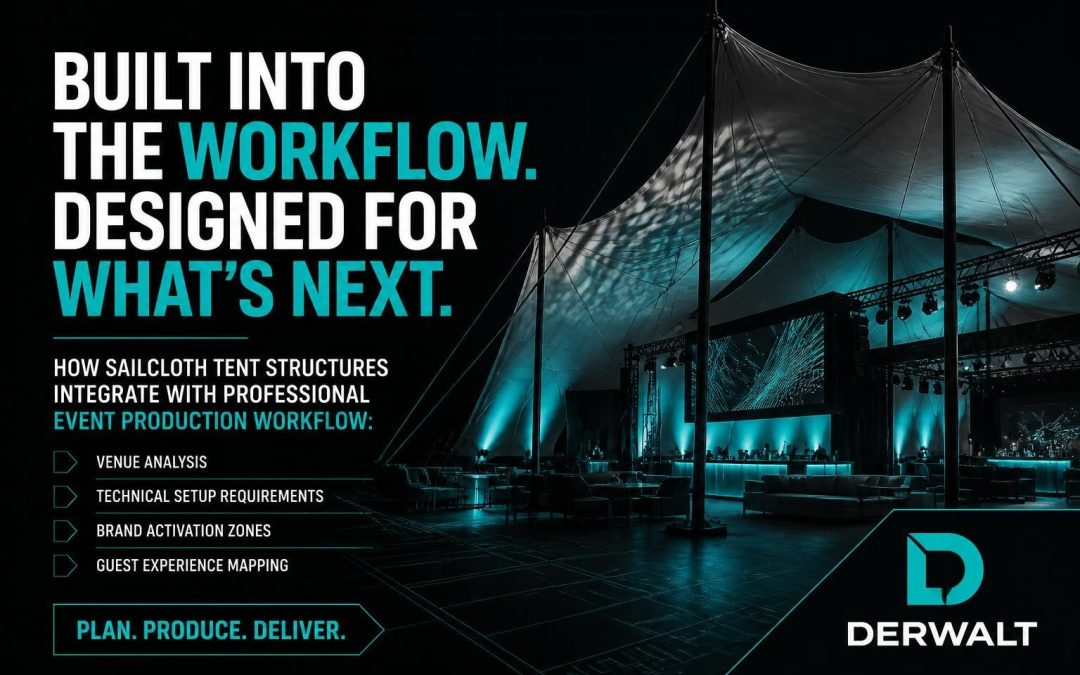
When brand experiences demand both visual impact and structural integrity, the sailcloth tent represents a strategic infrastructure decision that extends beyond basic weather protection. These purpose-built structures combine translucent fabric technology with engineered framing systems to create environments where natural light, spatial flexibility, and architectural presence converge. For event production teams managing corporate launches, experiential activations, and multi-day conferences, understanding the technical specifications, operational requirements, and strategic applications of sailcloth tents directly impacts budget allocation, risk mitigation, and client satisfaction metrics.
Technical Architecture and Material Performance
The sailcloth tent derives its name from marine-grade fabric technology originally developed for high-performance sailing applications. This heritage translates into specific material characteristics that differentiate these structures from standard event tents.
Fabric Composition and Light Transmission
Modern sailcloth tent fabric consists of woven polyester threads coated with polyurethane or PVC compounds, creating a semi-translucent membrane that filters natural light while maintaining structural tension. The resulting light quality eliminates harsh shadows and reduces reliance on supplementary lighting systems during daylight hours.
Key material specifications include:
- Thread density ranging from 200 to 400 denier depending on application requirements
- UV resistance ratings that prevent fabric degradation across multiple seasons
- Flame retardant certifications meeting NFPA 701 and local fire safety regulations
- Tensile strength exceeding 2,000 PSI for peak stress points
- Water resistance with sealed seams preventing infiltration during precipitation events
The translucent properties create a distinctive ambient environment that supports brand storytelling through natural illumination patterns. This characteristic becomes particularly valuable for daytime product launches, culinary experiences, and wellness-focused activations where artificial lighting would compromise the intended atmosphere.

Structural Engineering and Load Distribution
Unlike pole tents that rely on interior support columns, sailcloth tents utilize a perimeter frame system that maximizes usable interior space. The signature peaked roof design channels wind loads and precipitation runoff through engineered stress points, distributing forces across anchoring systems rather than concentrating weight on vertical supports.
| Structural Element | Function | Production Consideration |
|---|---|---|
| Peak tension cables | Maintain roof geometry under wind load | Require pre-event tension calibration |
| Perimeter aluminum frames | Distribute vertical and lateral forces | Foundation requirements vary by soil type |
| Guy line systems | Stabilize peaks and prevent membrane flutter | Spatial footprint extends beyond tent perimeter |
| Anchoring mechanisms | Transfer loads to ground or ballast systems | Load calculations based on local wind ratings |
This architectural approach enables clear-span interiors up to 60 feet wide without obstructing sightlines, a critical factor when designing spaces for keynote presentations, fashion shows, or product demonstrations where every guest requires unobstructed views.
Strategic Applications Across Event Categories
The sailcloth tent's versatility extends across diverse event typologies, each demanding specific production intelligence and technical planning considerations.
Corporate Brand Activations and Product Launches
When introducing new products or celebrating brand milestones, companies require environments that amplify messaging without competing for visual attention. The sailcloth tent's clean aesthetic and adaptable interior configuration support branded buildouts, experiential zones, and technology integration.
Production teams leverage the structure's modular nature to create distinct experience areas within a single envelope. Registration zones transition into demonstration spaces that flow toward hospitality areas, all under continuous overhead protection. The technical planning process accounts for power distribution, HVAC requirements, and AV infrastructure that the tent must accommodate.
The advantages of sailcloth fabric over standard tent materials become evident in temperature regulation and acoustic performance. The woven structure allows minimal air circulation while maintaining weather protection, reducing HVAC loads compared to sealed vinyl alternatives. For multi-day events, this translates directly into reduced operational costs and improved guest comfort metrics.
Festival and Multi-Day Conference Environments
Extended event timelines demand infrastructure that maintains structural integrity and visual appeal across varying weather conditions. Sailcloth tents excel in these applications due to their engineered durability and maintenance-accessible design.
Operational advantages for extended deployments:
- Fabric tension adjustment capabilities that compensate for temperature-induced expansion
- Modular wall systems enabling configuration changes between event phases
- Integrated flooring compatibility for climate-controlled interior environments
- Lighting grid mounting points that support touring-grade production equipment
- Perimeter accessibility for service vehicle approaches during load-in and strike
Production managers coordinating successful events prioritize structures that minimize daily maintenance requirements while providing contingency access for technical adjustments. The sailcloth tent's design facilitates rapid panel replacement if damage occurs and allows lighting technicians to access overhead rigging without compromising guest areas below.
Site Analysis and Foundation Requirements
Selecting and preparing venues for sailcloth tent installation requires systematic assessment of ground conditions, spatial constraints, and environmental factors that influence structural stability.
Ground Condition Evaluation
The anchoring system selected for a sailcloth tent installation depends entirely on subsurface composition and load-bearing capacity. Hard surfaces like asphalt or concrete necessitate ballast systems that can range from water-filled containers to engineered concrete blocks. Natural ground installations typically utilize auger anchors or stake systems driven to depths calculated by soil type and anticipated wind loads.
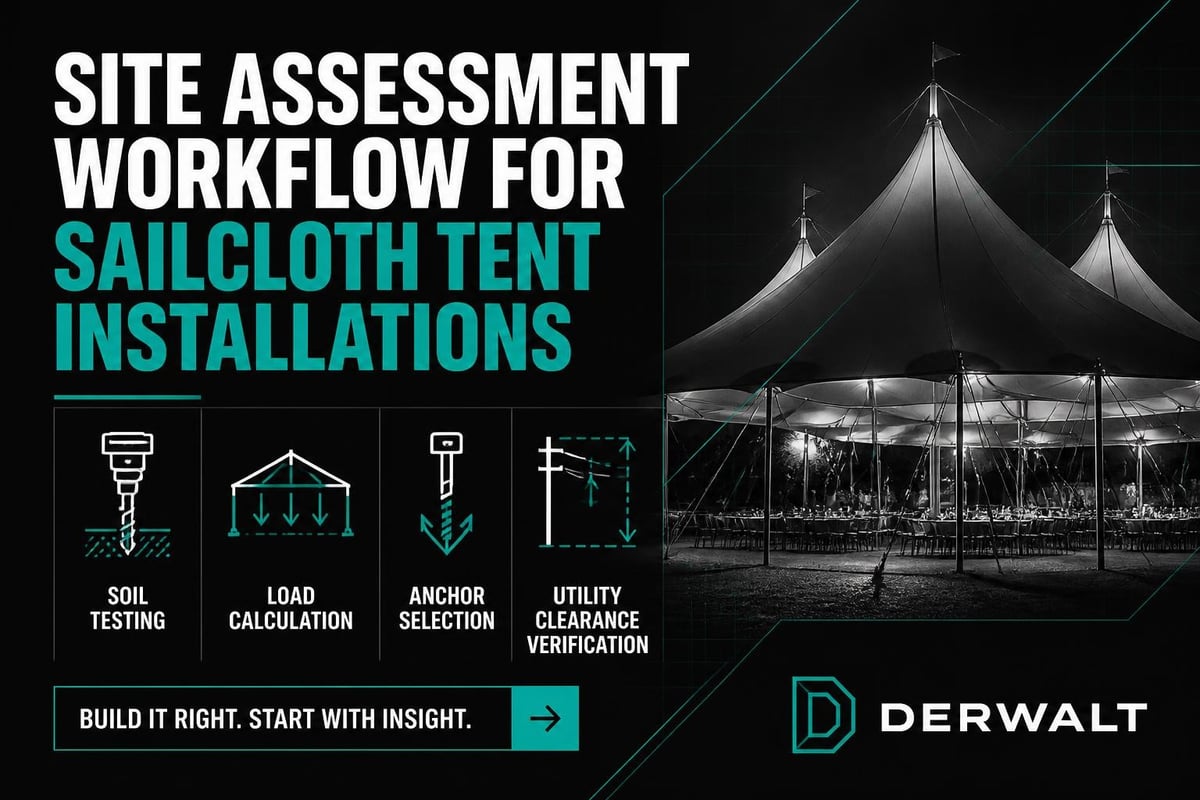
Production teams conducting venue assessments document underground utility locations, drainage patterns, and overhead clearances before committing to tent placement. This due diligence prevents costly repositioning during installation and identifies requirements for ground protection systems that preserve landscaping or prevent surface damage.
Spatial Planning and Clearance Zones
Beyond the tent's footprint, guy lines and stabilization cables extend the required perimeter, often adding 10 to 15 feet in all directions. When designing site layouts for activations and experiential engagement zones, this expanded footprint influences parking allocation, pedestrian flow patterns, and emergency vehicle access corridors.
The installation crew requires staging areas for component assembly before raising the structure. For large sailcloth tents exceeding 40 feet in width, crane access or specialized lifting equipment becomes necessary, further expanding the temporary space requirements during setup and strike operations.
Installation Logistics and Timeline Management
Professional sailcloth tent installation follows methodical sequences that balance efficiency with safety protocols, directly impacting overall event production timelines.
Crew Requirements and Skill Specifications
Unlike popup canopies that accommodate quick deployment, sailcloth tents demand trained installation teams familiar with tension calculations, rigging techniques, and structural assembly sequences. Typical crew sizes range from four specialists for smaller 20×30 structures to teams of eight or more for installations exceeding 40×60 configurations.
The installation process begins with frame assembly, progressing through fabric attachment, tension calibration, and final stabilization. Each phase includes verification checkpoints where supervisors confirm alignment tolerances and stress distribution before advancing to subsequent steps. Understanding overcoming sailcloth tent setup challenges helps production teams anticipate common obstacles and implement mitigation strategies.
Weather Windows and Contingency Planning
Wind conditions directly impact installation safety and fabric handling procedures. Industry standards typically restrict sailcloth tent installation when sustained winds exceed 15 miles per hour, as fabric panels become unmanageable and pose risks to crew members.
Production schedules incorporate weather monitoring protocols and identify backup installation windows that accommodate delays without compromising event readiness. For critical timelines, advance installation several days before guest arrival creates buffer periods that absorb weather-related postponements while allowing interior buildout to proceed on schedule.
Interior Configuration and Brand Integration
Once the sailcloth tent envelope establishes the protected environment, interior design and technical systems transform the space into a branded experience that serves strategic event objectives.
Spatial Zoning and Traffic Flow
The clear-span interior of a sailcloth tent enables flexible space planning without structural constraints dictating circulation patterns. Production designers segment spaces using freestanding elements, soft goods, and modular furnishings that guide guest movement while maintaining sight lines and emergency egress routes.
Common zone configurations include:
- Reception and registration areas with branded welcome elements
- Primary presentation or demonstration spaces with AV infrastructure
- Hospitality zones featuring catering stations and lounge seating
- Breakout areas for smaller group interactions or private consultations
- Back-of-house zones for technical support and talent preparation
Each zone receives lighting treatment that reinforces its function while contributing to the overall environmental narrative. The sailcloth tent's natural light during daytime transitions to theatrical lighting after dark, requiring integrated control systems that manage both sources seamlessly.
Environmental Control Systems
Guest comfort standards demand consistent temperature regulation regardless of external conditions. HVAC systems for sailcloth tents must account for the fabric's air permeability characteristics and calculate tonnage requirements based on climate zone, occupancy density, and event duration.
| Climate Consideration | System Specification | Operational Impact |
|---|---|---|
| Summer cooling loads | 1 ton per 150-200 sq ft | Power requirements increase with ambient temperature |
| Winter heating demands | Forced air or radiant systems | Insulated flooring improves efficiency |
| Humidity management | Dehumidification units for condensation control | Prevents fabric deterioration and guest discomfort |
| Air circulation patterns | Strategic placement preventing dead zones | Influences equipment positioning and ductwork routing |
Production teams managing complete through-the-line service delivery coordinate HVAC installation timelines with electrical infrastructure deployment to ensure systems achieve target conditions before guest arrival.
Maintenance Protocols and Longevity Optimization
Protecting the capital investment in sailcloth tent infrastructure requires systematic maintenance practices that preserve fabric integrity and extend structural lifespan.
Cleaning and Fabric Care
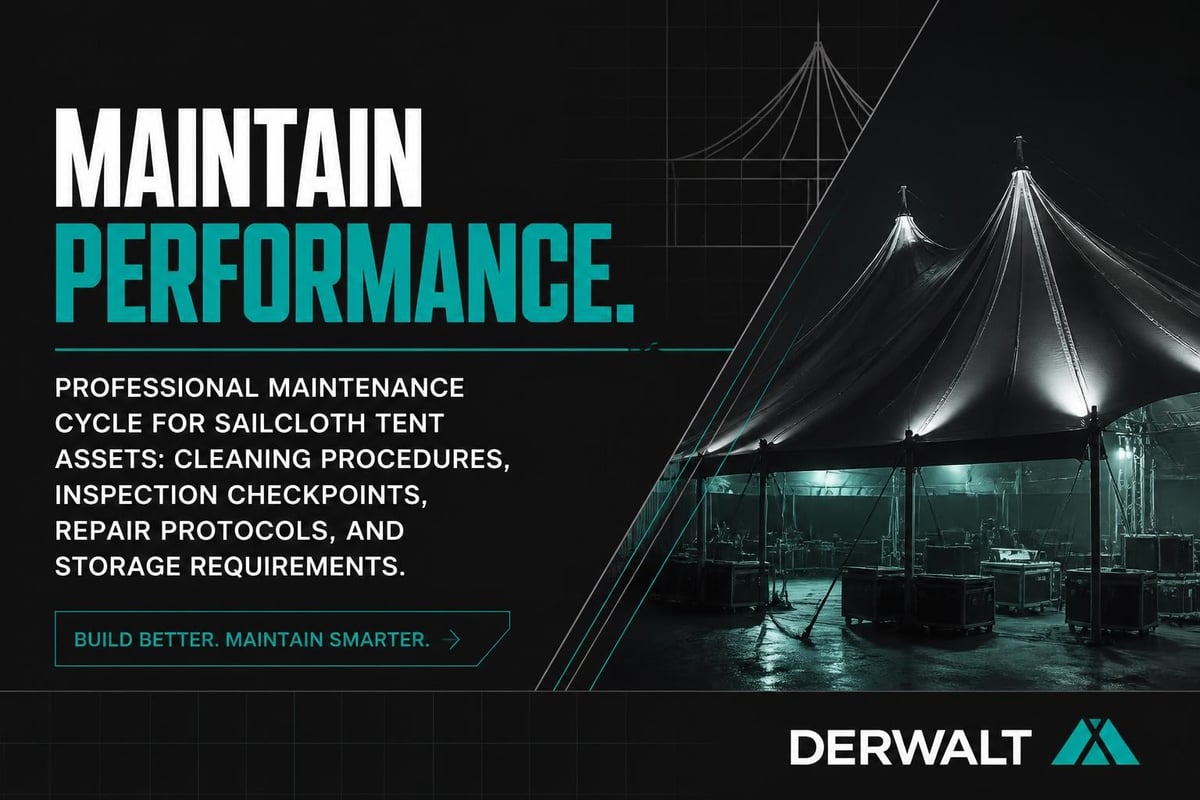
Regular cleaning prevents organic buildup, staining, and UV-accelerated degradation that compromise both appearance and material performance. Professional maintenance follows established protocols that balance cleaning effectiveness with fabric preservation. The guidance on sailcloth tent upkeep emphasizes gentle cleaning agents and low-pressure washing techniques that remove contaminants without damaging protective coatings.
Recommended maintenance intervals:
- Post-event surface cleaning to remove debris and standing water
- Quarterly deep cleaning for frequently deployed inventory
- Annual inspection addressing seam integrity and coating condition
- Immediate spot treatment for organic stains or bird droppings
- Pre-storage cleaning before extended dormancy periods
Fabric care extends to proper drying procedures that prevent mildew formation. Sailcloth tents stored while damp develop bacterial growth that weakens fibers and creates odors requiring extensive remediation. Production companies with high utilization rates invest in climate-controlled storage facilities that maintain optimal humidity levels year-round.
Structural Component Inspection
Beyond fabric maintenance, frame elements, hardware connections, and tensioning systems require periodic inspection addressing wear patterns, corrosion, and mechanical integrity. Aluminum frames resist rust but develop stress fractures at connection points subjected to repeated assembly cycles. Inspection protocols identify fatigue indicators before component failure occurs during installation or use.
Hardware inventory management tracks individual components to ensure complete sets remain together and replacement parts integrate with existing systems. Production operations maintaining multiple sailcloth tent units standardize hardware specifications across inventory to maximize parts interchangeability and simplify field repairs.
Budget Considerations and ROI Analysis
Strategic investment decisions regarding sailcloth tent acquisition versus rental require financial analysis incorporating utilization projections, maintenance costs, and operational flexibility requirements.
Acquisition Cost Components
Purchasing sailcloth tent infrastructure involves several cost categories beyond the basic structure itself. Complete deployment packages include the fabric envelope, frame system, anchoring hardware, storage containers, and transportation cases designed to protect components during transit.
Additional investments support operational readiness:
- Backup fabric panels for critical repairs without inventory downtime
- Specialized installation tools including tension gauges and rigging equipment
- Training for internal crews or certification for contracted installation teams
- Insurance coverage addressing liability and asset protection
- Storage facility costs for climate-controlled component preservation
Rental Economics and Decision Factors
For production companies executing occasional outdoor events, rental agreements provide access to sailcloth tent infrastructure without capital commitment. Rental pricing structures typically calculate costs per linear foot of tent perimeter, with additions for sidewalls, flooring systems, and installation services.
The financial crossover point where ownership becomes economically advantageous depends on annual utilization rates. Companies deploying sailcloth tents more than six times annually often achieve better economics through ownership, while those with sporadic requirements benefit from rental flexibility that eliminates maintenance responsibilities and storage costs.
When evaluating these structures within broader production intelligence frameworks, the ability to control timing, customization, and brand integration often outweighs pure cost comparisons. Ownership enables advance preparation, custom modifications, and scheduling autonomy that rental agreements may restrict.
DERWALT's approach to production intelligence encompasses infrastructure decisions like sailcloth tent deployment as components of comprehensive event systems rather than isolated vendor relationships. By integrating venue analysis, technical specifications, and logistical coordination into unified production frameworks, the team ensures that structural elements support strategic brand objectives while maintaining operational efficiency and budget discipline.
Regulatory Compliance and Permitting Requirements
Temporary structure installations face regulatory oversight addressing safety standards, occupancy limits, and community ordinances that vary by jurisdiction. Production teams navigating these requirements engage with multiple stakeholder groups to secure necessary approvals before installation begins.
Fire Safety and Code Compliance
Sailcloth tents intended for public assembly must meet flame resistance specifications defined by national and local fire codes. Fabric certifications demonstrate compliance with NFPA 701 standards, while installation practices address egress requirements, fire extinguisher placement, and emergency lighting systems.
Regulatory documentation typically includes:
- Fabric flame certification from accredited testing laboratories
- Structural engineering stamps verifying load calculations and stability
- Site plans showing emergency access routes and fire apparatus positioning
- Occupancy calculations based on square footage and seating configurations
- Electrical inspection approvals for temporary power distribution systems
Jurisdictions with stringent temporary structure ordinances may require building permits, engineering reviews, and third-party inspections before approving sailcloth tent installations. Production timelines account for permit application processing periods that can range from two weeks to several months depending on local authority workload and review complexity.
Wind Rating and Weather Restrictions
Local building codes specify wind load requirements that temporary structures must withstand based on regional weather patterns and historical data. Sailcloth tents receive engineering certifications defining maximum sustained wind speeds and gust ratings for safe operation.
When forecast conditions approach or exceed these thresholds, event organizers face difficult decisions balancing guest safety against program continuation. Evacuation protocols and structure monitoring procedures become critical components of event management plans that protect both attendees and production teams.
Comparative Analysis With Alternative Tent Structures
Understanding where sailcloth tents deliver optimal value requires comparison with alternative temporary structure options that serve similar functional requirements.
Frame Tents and Clear Span Structures
Traditional frame tents utilize similar perimeter support systems but employ opaque vinyl fabric that blocks natural light entirely. This distinction influences interior lighting budgets and daytime atmosphere significantly. Clear span structures offer larger footprints and higher load capacities for suspended production elements but at substantially higher costs and longer installation timelines.
| Structure Type | Interior Width Capacity | Natural Light Transmission | Typical Installation Duration | Relative Cost Position |
|---|---|---|---|---|
| Sailcloth tent | Up to 60 feet | 40-60% light transmission | 4-8 hours for standard sizes | Premium pricing tier |
| Frame tent (vinyl) | Up to 60 feet | Opaque, zero transmission | 4-6 hours for standard sizes | Mid-range pricing |
| Clear span structure | 100+ feet possible | Depends on fabric selection | 8-16 hours for complex builds | Highest cost category |
| Pole tent | Up to 40 feet practical | Opaque traditional fabric | 6-10 hours with interior poles | Budget to mid-range |
The six key benefits of a sailcloth tent articulate how the structure's unique characteristics create value propositions that alternative options cannot replicate, particularly for brands prioritizing aesthetic sophistication and natural environmental integration.
Permanent Venue Alternatives
For recurring events at consistent locations, permanent or semi-permanent structures eliminate repeated installation costs while providing enhanced environmental control and amenity integration. However, this approach sacrifices flexibility for venue optimization and limits geographic reach for brands executing multi-market activation tours.
Sailcloth tents occupy the middle ground, offering professional presentation quality that approaches permanent venue standards while maintaining the strategic mobility that supports dynamic brand activation programs across diverse markets and seasonal opportunities.
Integration With Comprehensive Production Systems
The sailcloth tent functions as one infrastructure component within complex production ecosystems that deliver complete brand experiences. Its successful deployment depends on coordination with parallel systems addressing power distribution, technology integration, hospitality operations, and safety protocols.
Production managers orchestrate these interdependencies through detailed technical specifications that define interface points between structural elements and operational systems. Power requirements calculated from lighting, HVAC, AV, and catering equipment inform generator specifications and cable routing plans. Network infrastructure supporting registration systems, payment processing, and content distribution requires protected pathways and equipment positioning compatible with tent geometry.
This systems-level perspective separates strategic production partners from vendors providing isolated services. When evaluating sailcloth tent applications for specific events, the question extends beyond whether the structure suits the venue and weather conditions. The analysis must address how the tent integrates with broader production intelligence that delivers measurable outcomes aligned with client objectives and brand positioning requirements.
Strategic sailcloth tent deployment demands technical expertise, logistical precision, and systems integration that few production teams possess internally. By partnering with specialists who understand how structural decisions influence brand experience outcomes, companies ensure their investments deliver both operational reliability and strategic impact. DERWALT brings production intelligence to every element of event delivery, from venue analysis and infrastructure selection through technical execution and post-event evaluation, ensuring your brand experiences achieve their full potential.
Recent Comments