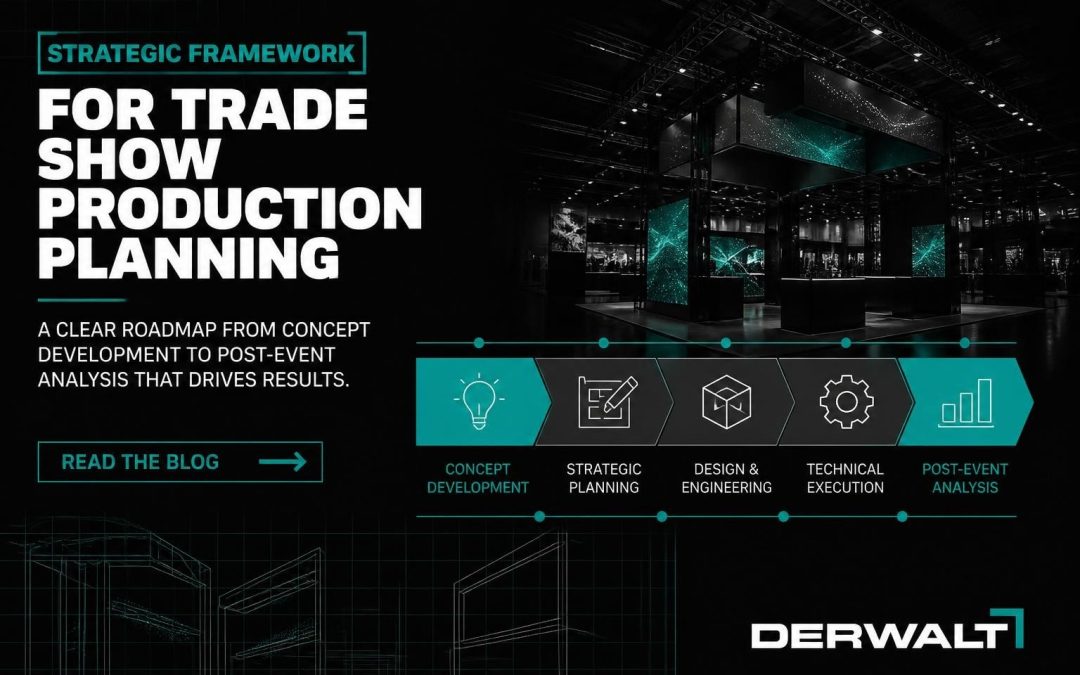
Trade show productions represent a critical intersection of brand strategy, technical execution, and measurable business outcomes. Unlike standard corporate gatherings or consumer-facing activations, trade shows demand precision-engineered experiences that communicate brand positioning while facilitating meaningful business connections. The complexity of orchestrating compelling exhibition stands, managing technical infrastructure, and delivering consistent brand messages across multi-day events requires specialized production intelligence and operational discipline. For brands competing in crowded exhibition halls, the difference between generic presence and market-leading impact lies in strategic production planning that integrates creative vision with execution excellence.
Strategic Foundation for Trade Show Productions
Effective trade show productions begin months before the first panel is installed. Strategic planning establishes the framework for every downstream decision, from booth design to staffing protocols. This foundation must align with broader marketing objectives while accounting for the unique constraints of exhibition environments.
Pre-production strategic elements include:
- Budget allocation across design, construction, technology, and human resources
- Target audience profiling and engagement pathway mapping
- Competitive positioning within the exhibition hall layout
- Measurable KPI definition tied to business development goals
- Risk assessment covering logistics, technical systems, and contingency scenarios
The trade show trends emerging in 2026 emphasize experience-led design and sustainability integration, requiring production teams to balance innovation with operational feasibility. Brands must evaluate whether trending elements genuinely serve their strategic objectives or simply add complexity without proportional return.
Venue Intelligence and Spatial Planning
Exhibition venues present distinct challenges compared to controlled event spaces. Load-in schedules, electrical capacity limitations, rigging restrictions, and neighboring exhibitor activities all impact production feasibility. Successful teams conduct comprehensive venue assessments that inform technical specifications and operational timelines.
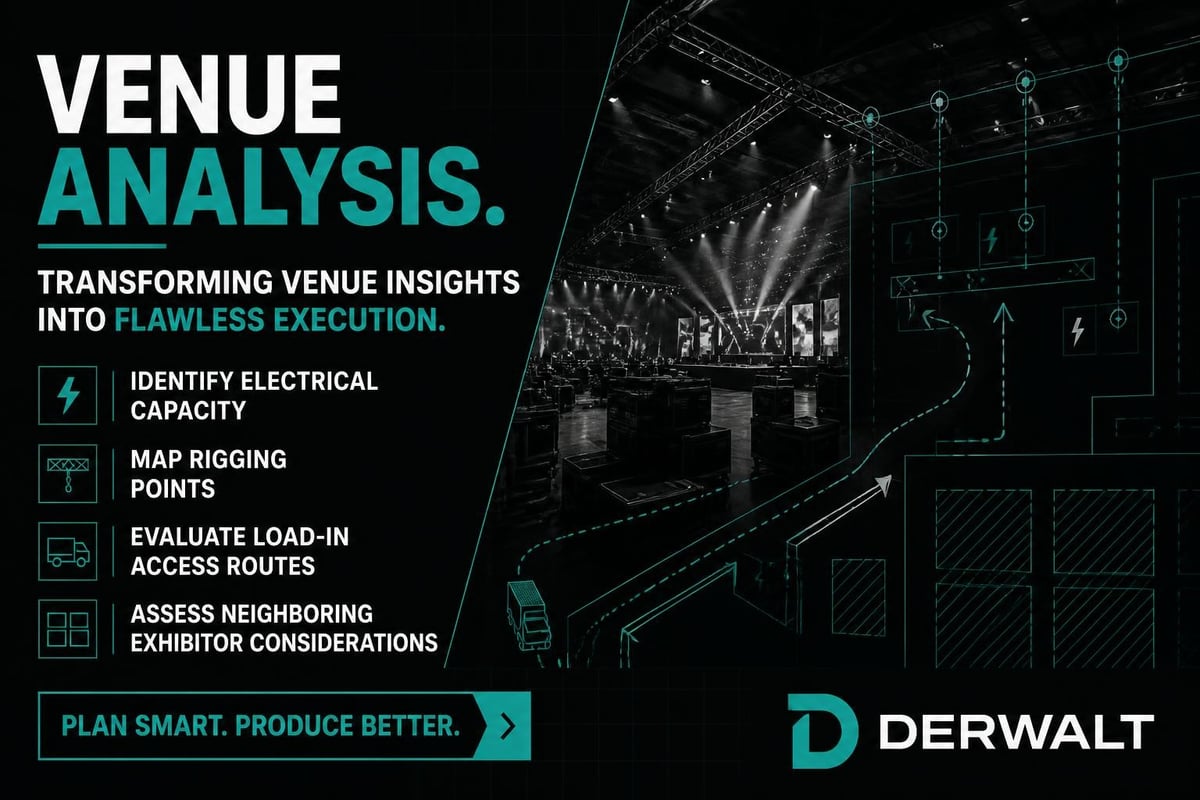
Spatial planning extends beyond booth footprint to encompass attendee flow patterns, sightlines from main aisles, and integration with broader exhibition hall architecture. Technical layout planning determines whether ambitious creative concepts can be realized within venue constraints and budget parameters.
Production Management and Execution Framework
Trade show productions require military-grade logistics coordination. Multiple vendor streams, compressed installation windows, and zero-tolerance timelines demand production management systems that track dependencies, mitigate delays, and maintain quality standards under pressure.
| Production Phase | Key Deliverables | Critical Timeline |
|---|---|---|
| Concept Development | Design renders, technical specifications, budget models | 90-120 days pre-show |
| Fabrication & Build | Booth construction, AV integration, graphics production | 45-60 days pre-show |
| Logistics Coordination | Shipping manifests, load-in schedules, crew assignments | 30 days pre-show |
| On-site Installation | Build execution, technical testing, final adjustments | 2-3 days pre-show |
| Event Operation | Staff briefings, system monitoring, real-time troubleshooting | Show days |
| Breakdown & Analysis | Deinstallation, asset management, performance evaluation | Post-show |
Production intelligence separates competent execution from exceptional outcomes. This means anticipating supplier delays before they cascade into critical path disruptions, identifying single points of failure in technical systems, and maintaining alternative solutions for high-risk elements.
Technical Integration and Systems Management
Modern trade show productions integrate sophisticated technology platforms that enhance engagement while introducing technical complexity. LED walls, interactive displays, product demonstration zones, and data capture systems must function flawlessly across extended operating hours.
Technical system considerations:
- Power distribution and backup systems
- Network infrastructure and bandwidth allocation
- Audio reinforcement for demonstration zones
- Lighting design balancing brand aesthetics with functional visibility
- Content management systems for dynamic messaging
- Integration protocols connecting disparate technology platforms
The comprehensive production management services required for complex trade show environments demand specialized expertise across multiple technical disciplines. Teams must troubleshoot equipment malfunctions without visible disruption to attendee experiences, maintain system performance under continuous operation, and adapt to unexpected technical challenges in real-time.
Brand Activation Within Exhibition Environments
Trade show productions serve as three-dimensional brand communications, translating marketing strategy into physical experiences. This requires conceptual rigor that connects booth design, staff interaction protocols, and technological elements into cohesive brand narratives.
Successful activations balance visual impact with functional utility. Attendees must immediately grasp brand positioning while discovering clear pathways for deeper engagement. Experiential event marketing within trade show contexts demands precision choreography where every element reinforces strategic messaging.
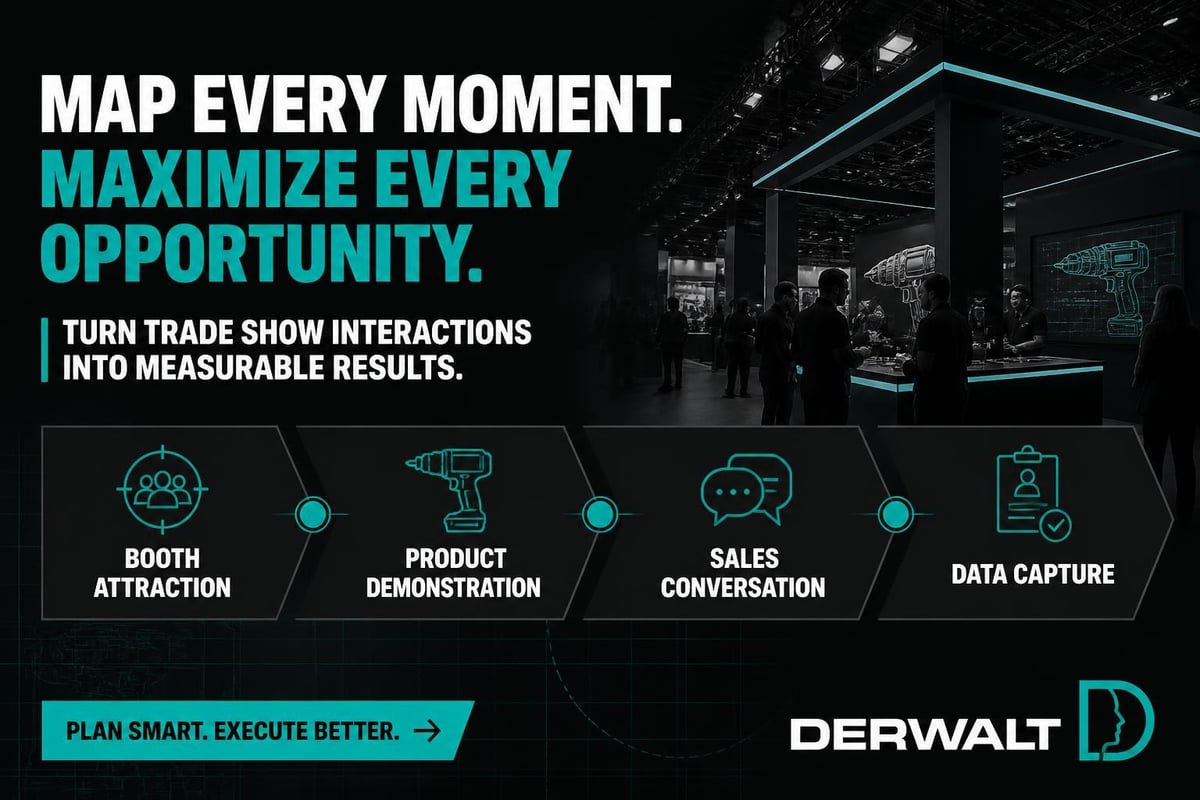
Engagement Architecture and Conversion Pathways
Moving attendees from passive observation to active participation requires intentional engagement design. Traffic flow patterns, demonstration zones, private meeting spaces, and digital interaction points must support natural progression through defined conversion stages.
Organizations implementing 2025 engagement-focused trends report measurable improvements in qualified lead generation when production design aligns with behavioral psychology principles. This includes strategic placement of high-value demonstrations away from main traffic lanes to encourage sustained interaction and positioning data capture moments at natural conversation endpoints.
Staff training represents the human dimension of trade show productions. Even flawlessly executed physical environments fail without teams equipped to articulate value propositions, qualify prospects, and manage sustained conversations across multi-day events. Production planning must allocate resources for comprehensive staff preparation covering product knowledge, engagement protocols, and lead management systems.
Risk Mitigation and Operational Resilience
Trade show productions operate in high-stakes environments where failure impacts brand reputation and ROI simultaneously. Comprehensive risk mitigation addresses technical failures, logistical disruptions, and operational contingencies before they escalate into visible problems.
Critical risk categories:
- Technical Systems: Equipment redundancy for mission-critical elements, backup power systems, pre-event testing protocols
- Logistics: Delayed shipments, customs clearance issues, transportation failures, alternative supplier networks
- Human Resources: Staff illness, inadequate training, inconsistent brand representation
- Venue Coordination: Schedule conflicts, neighboring exhibitor interference, facility system failures
- Regulatory Compliance: Safety regulations, electrical certifications, structural engineering approvals
The five major trends shaping trade show futures include heightened safety protocols and touchless technology integration, adding new dimensions to risk assessment frameworks. Production teams must evaluate whether safety enhancements compromise engagement effectiveness or whether thoughtful design integrates protection seamlessly into attendee experiences.
DERWALT does not simply build events but constructs the operational systems behind successful brand experiences through production intelligence that anticipates challenges, controls budgets, and delivers technical excellence. This systematic approach to 360-degree event production ensures brands maintain strategic focus while production teams manage complex execution details.
Budget Control and Financial Discipline
Trade show productions consume significant marketing budgets, demanding rigorous financial management that balances creative ambition with fiscal responsibility. Transparent cost modeling, change order protocols, and value engineering ensure expenditures generate proportional business outcomes.
| Budget Category | Typical Allocation | Value Optimization Strategy |
|---|---|---|
| Booth Design & Fabrication | 30-40% | Modular systems enabling multi-show reuse |
| Technology & AV Systems | 20-25% | Rental vs. purchase analysis for specialized equipment |
| Graphics & Messaging | 10-15% | Digital content reducing physical production costs |
| Logistics & Installation | 15-20% | Consolidated shipping, efficient labor scheduling |
| Staffing & Operations | 10-15% | Strategic headcount balancing coverage with efficiency |
Financial discipline extends beyond initial budget development to encompass ongoing cost monitoring and scope management. Production teams must evaluate change requests against strategic value, distinguish between essential adjustments and scope creep, and maintain transparent communication regarding budget impacts.
Measuring Return and Performance Analysis
Post-event analysis transforms trade show productions from isolated tactical executions into learning opportunities that inform future strategy. Measuring performance requires establishing clear KPIs during planning phases and implementing data capture systems that track defined metrics.
Measurable performance indicators include:
- Qualified lead volume and conversion rates
- Booth traffic patterns and engagement duration
- Demonstration participation and product interest levels
- Media impressions and brand mention volume
- Cost per qualified lead compared to alternative channels
- Staff performance metrics and interaction quality
The best practices for trade show marketing emphasize pre-show promotion, customer interaction quality, and systematic success measurement. Organizations implementing structured analysis protocols identify optimization opportunities that compound across annual show circuits, reducing waste while amplifying effective elements.
Sustainability Integration and Environmental Responsibility
Trade show productions generate substantial material waste and environmental impact through booth construction, shipping logistics, and energy consumption. Progressive brands integrate sustainability principles into production planning, balancing environmental responsibility with budget constraints and design requirements.
Sustainable production strategies include modular booth systems enabling multi-event reuse, local fabrication reducing transportation emissions, recyclable materials selection, and energy-efficient lighting and technology systems. The 2025-2026 sustainability trends demonstrate growing client demand for environmentally conscious production approaches.
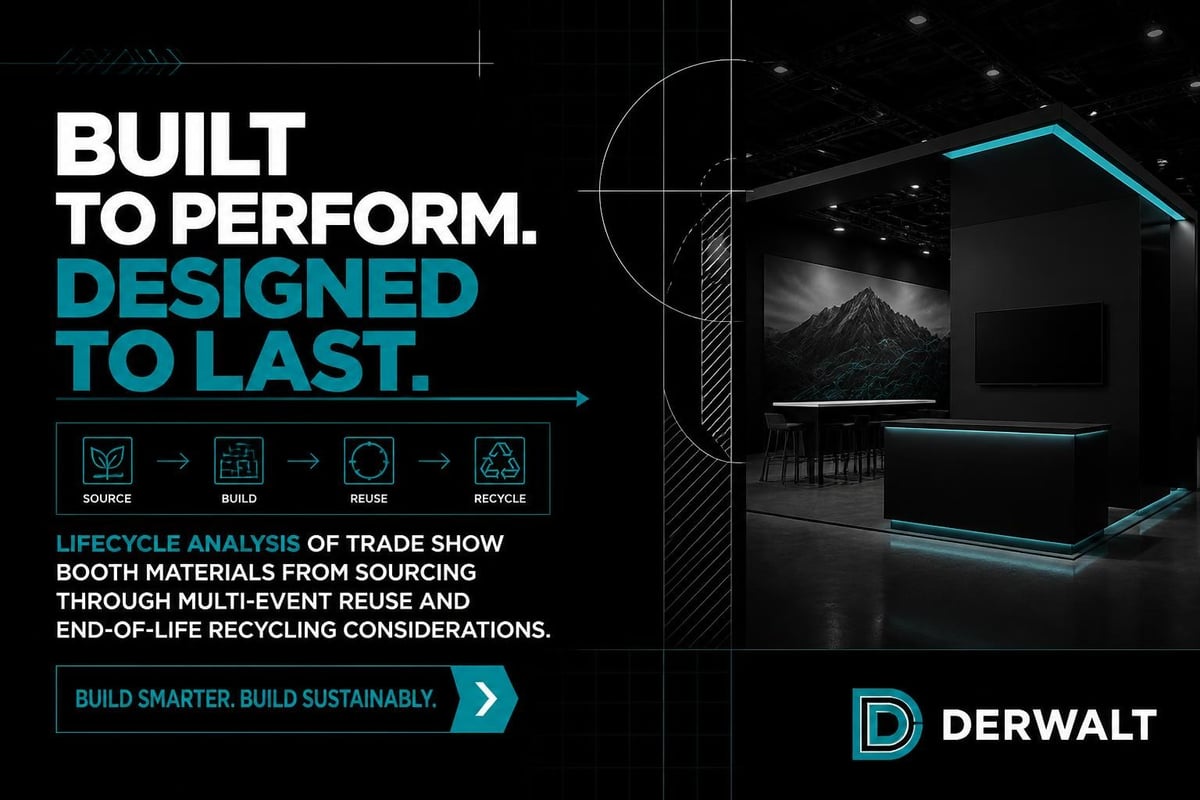
Beyond materials selection, sustainable trade show productions optimize logistics networks, consolidate shipments, and implement waste management protocols that divert exhibition materials from landfills. These practices frequently generate cost savings while enhancing brand positioning with environmentally conscious stakeholders.
Technology Evolution and Digital Integration
Digital technology fundamentally reshapes trade show productions, introducing interactive experiences impossible through static displays alone. Virtual product demonstrations, augmented reality applications, AI-powered personalization, and integrated CRM systems transform booths into data-rich engagement platforms.
However, technology integration demands strategic evaluation. Not every innovative tool serves every brand objective. Production teams must assess whether technological elements genuinely enhance attendee experiences and business outcomes or simply add complexity and cost without proportional return.
The comprehensive trade show setup guide for 2026 emphasizes planning thoroughness and systematic execution as technology complexity increases. Teams must balance innovation with reliability, selecting proven systems over cutting-edge solutions that introduce untested risk into mission-critical environments.
Content Strategy and Dynamic Messaging
Digital integration enables dynamic content that adapts to audience segments, time of day, and real-time event developments. Production planning must account for content creation workflows, approval processes, and deployment systems that deliver targeted messaging across multiple touchpoints.
Video content particularly enhances trade show engagement when deployed strategically. The best practices for trade show video recommend concise messaging, prominent on-screen text accommodating sound-off viewing, and strategic display positioning maximizing visibility without creating distraction.
Supplier Management and Partnership Networks
Trade show productions coordinate dozens of specialized vendors across fabrication, technology, logistics, staffing, and ancillary services. Managing these relationships requires clear communication protocols, defined accountability structures, and collaborative problem-solving approaches.
Successful production teams cultivate supplier networks that balance specialized expertise with reliable execution. This means evaluating partners not solely on cost but on track records, technical capabilities, and alignment with quality standards. Strategic supplier relationships enable consistent execution across multiple shows while facilitating knowledge transfer that elevates overall production quality.
Effective supplier management practices:
- Detailed scope documentation preventing ambiguity and disputes
- Milestone-based payment structures aligning compensation with delivery
- Regular progress reviews identifying issues before they impact timelines
- Collaborative contingency planning addressing potential disruptions
- Post-event debriefs capturing lessons and improvement opportunities
The trade show tips and best practices emphasize thorough preparation across all production dimensions, including supplier coordination and venue relationship management. Organizations treating vendors as strategic partners rather than transactional resources achieve superior outcomes through enhanced collaboration and mutual investment in success.
Staff Coordination and Team Performance
Human performance represents the variable element in otherwise systematized trade show productions. Even perfect booth design and flawless technical execution fail without trained teams who articulate value propositions, qualify prospects, and maintain brand standards across extended operating hours.
Production planning must allocate resources for comprehensive staff preparation covering product knowledge, engagement protocols, lead qualification criteria, and technology system operation. This includes rehearsal sessions in completed booth environments, scenario planning for challenging attendee interactions, and clear escalation pathways for complex questions or technical issues.
Beyond initial training, operational management maintains performance standards through shift scheduling that prevents fatigue, regular team briefings addressing real-time adjustments, and systematic feedback collection identifying improvement opportunities. The event show management expertise required for complex productions includes human performance optimization alongside technical system management.
Competitive Differentiation and Market Positioning
Exhibition halls present intensely competitive environments where dozens of organizations compete for limited attendee attention. Trade show productions must achieve differentiation that attracts target audiences while communicating distinct brand positioning.
This differentiation emerges through strategic choices rather than simply increased spending. Organizations achieve standout presence through conceptual clarity, focused messaging, and execution discipline that eliminates unnecessary complexity while amplifying core brand strengths.
| Differentiation Strategy | Implementation Approach | Expected Outcome |
|---|---|---|
| Vertical Market Focus | Specialized demonstrations addressing niche applications | Qualified prospect attraction |
| Thought Leadership | Educational content and expert presentations | Authority positioning |
| Innovation Showcase | Product launch events and exclusive previews | Media attention and buzz generation |
| Experience Design | Memorable interactions creating emotional connections | Brand recall and word-of-mouth |
| Hospitality Excellence | Premium amenities and personalized service | Relationship depth with key accounts |
The trends to watch in 2026 highlight measurable value focus and efficiency optimization, suggesting brands prioritize strategic differentiation over generic scale. This means concentrating resources on fewer, higher-impact elements rather than attempting comprehensive coverage across all possible engagement modes.
Global Considerations and Regional Adaptation
Trade show productions for international events introduce additional complexity through cultural considerations, language requirements, regulatory differences, and logistical challenges. Production teams must adapt standard approaches while maintaining brand consistency across diverse markets.
Regional adaptation extends beyond translation to encompass design preferences, color symbolism, demonstration protocols, and hospitality norms. What resonates in European exhibition environments may require significant modification for Asian or African markets. Strategic production planning accounts for these nuances while preserving core brand identity.
Logistical complexity multiplies for international shows through customs requirements, equipment compatibility standards, local supplier networks, and extended transportation timelines. Organizations must evaluate whether shipping familiar booth systems internationally justifies costs compared to engaging local fabrication partners or maintaining regional inventory.
Successful trade show productions demand integration of strategic planning, technical expertise, and operational discipline that transforms exhibition presence into measurable business outcomes. The complexity of coordinating design, technology, logistics, and human performance across compressed timelines and high-stakes environments requires specialized production intelligence that anticipates challenges and maintains quality standards under pressure. DERWALT delivers this systematic approach through comprehensive production management that bridges creative vision with flawless execution, ensuring your brand achieves differentiated impact in competitive exhibition environments.
Recent Comments