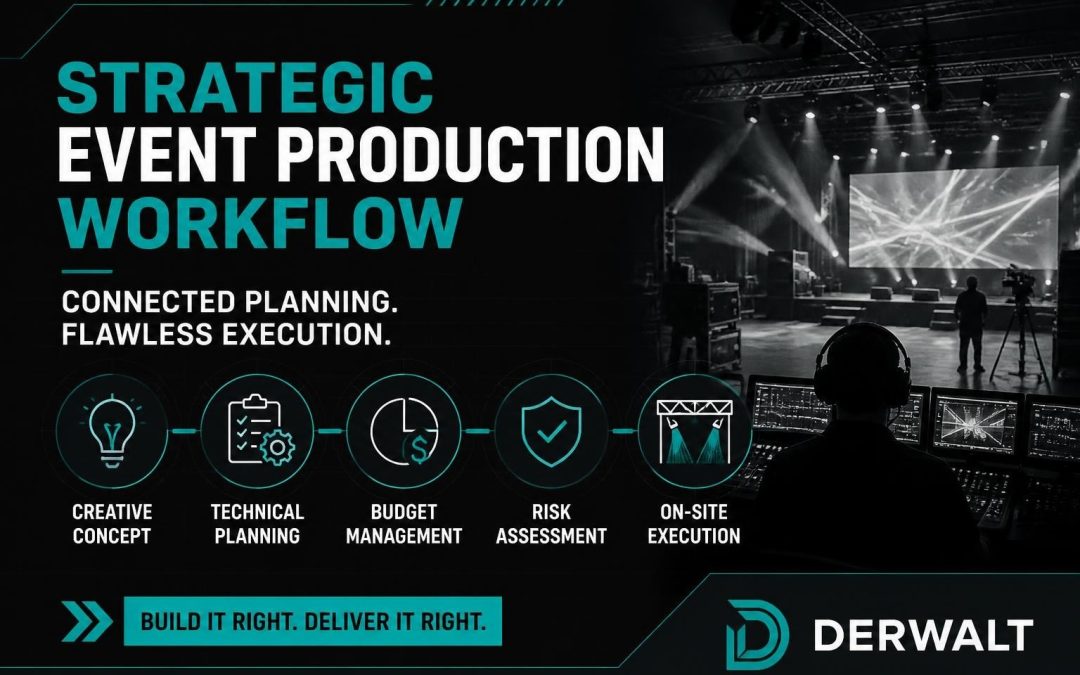
When stakeholders refer to "our event," they're making a statement about ownership, accountability, and strategic alignment. The phrase signals internal commitment to an initiative that represents brand values, drives business objectives, and demands production excellence. For organizations investing in live experiences in 2026, our event isn't just a date on the calendar-it's a comprehensive undertaking requiring strategic planning, technical precision, and execution intelligence across every touchpoint.
The Strategic Foundation Behind Our Event
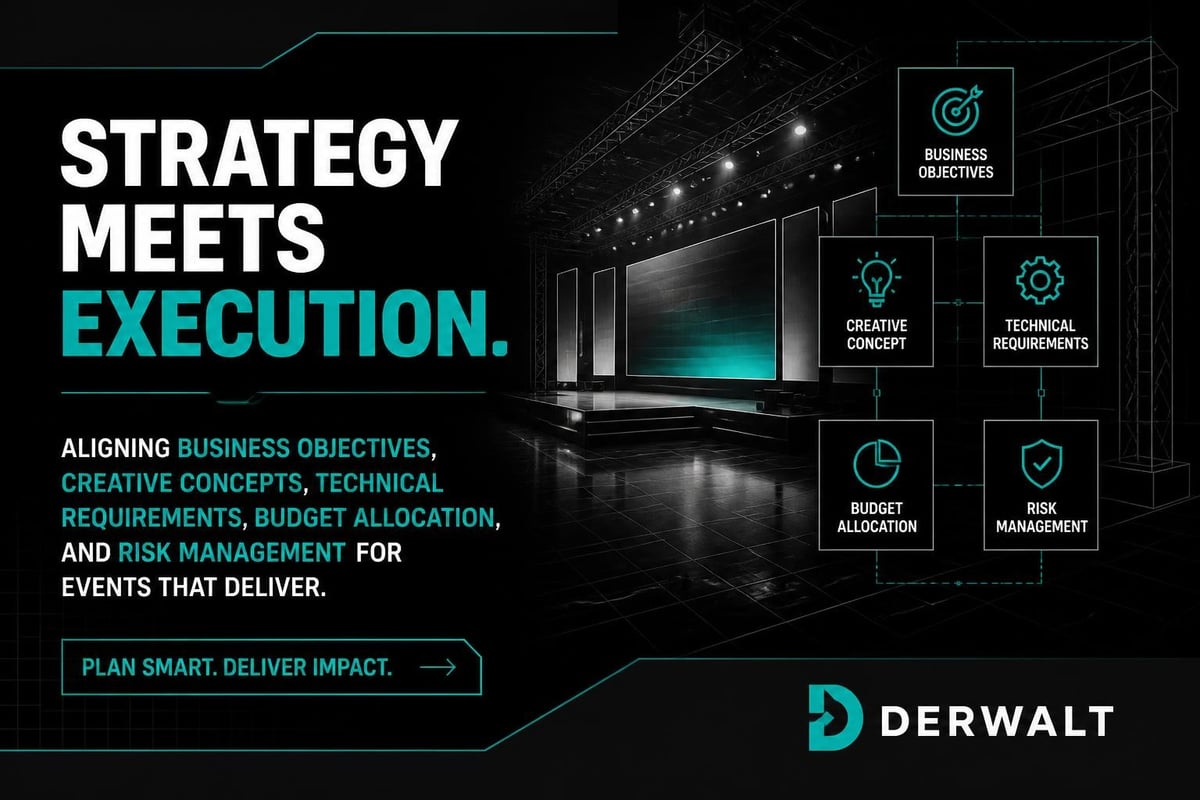
Every successful event begins with clarity of purpose. Our event must serve defined business objectives, whether launching a product, activating a brand position, engaging key stakeholders, or driving measurable market impact.
Strategic event planning requires alignment between creative ambition and operational reality. Organizations often approach events with compelling creative concepts but insufficient attention to the production infrastructure required to deliver them reliably. This misalignment creates risk, budget overruns, and compromised brand experiences.
Production intelligence bridges this gap by establishing:
- Clear success metrics tied to business outcomes
- Comprehensive technical requirements mapped to creative vision
- Budget frameworks that account for all production elements
- Risk mitigation strategies addressing known failure points
- Supplier management protocols ensuring quality and accountability
The foundation phase determines everything that follows. Without strategic clarity, our event becomes vulnerable to scope creep, miscommunication, and execution failures that damage brand credibility.
Production Planning That Delivers Certainty
Once strategic foundations are established, our event requires detailed production planning that transforms concepts into actionable execution plans. This phase separates professional event production from amateur approaches that rely on improvisation and hope.
Technical Architecture and Venue Coordination
Technical planning begins with comprehensive venue assessment and layout design. Every element-from power distribution and rigging points to audience flow and emergency protocols-must be mapped, specified, and coordinated before production begins.
Event venue coordination and logistics involves creating detailed technical drawings that communicate requirements to all stakeholders. These documents serve as the single source of truth, ensuring suppliers, venue staff, and production teams work from identical specifications.
| Planning Element | Purpose | Deliverable |
|---|---|---|
| Technical Drawings | Communicate spatial requirements | CAD layouts with specifications |
| Power Distribution | Ensure adequate electrical capacity | Load calculations and circuit plans |
| Rigging Plans | Verify structural load capacity | Weight calculations and hang plots |
| Flow Diagrams | Optimize audience movement | Entry/exit routes and capacity analysis |
Budget Control and Resource Allocation
Our event demands disciplined budget management that accounts for every production element while maintaining contingency reserves for unforeseen requirements. Professional budget frameworks categorize costs across creative development, technical infrastructure, supplier fees, venue costs, staffing, and contingency allowances.
According to effective event marketing strategies, budget transparency enables informed decision-making throughout the production lifecycle. When stakeholders understand cost implications, they make better choices about scope, timing, and creative execution.
Budget control isn't about minimizing costs-it's about maximizing value within defined parameters. Strategic budget allocation invests resources where they create the greatest impact on attendee experience and business outcomes.
The Multi-Channel Approach to Our Event Promotion
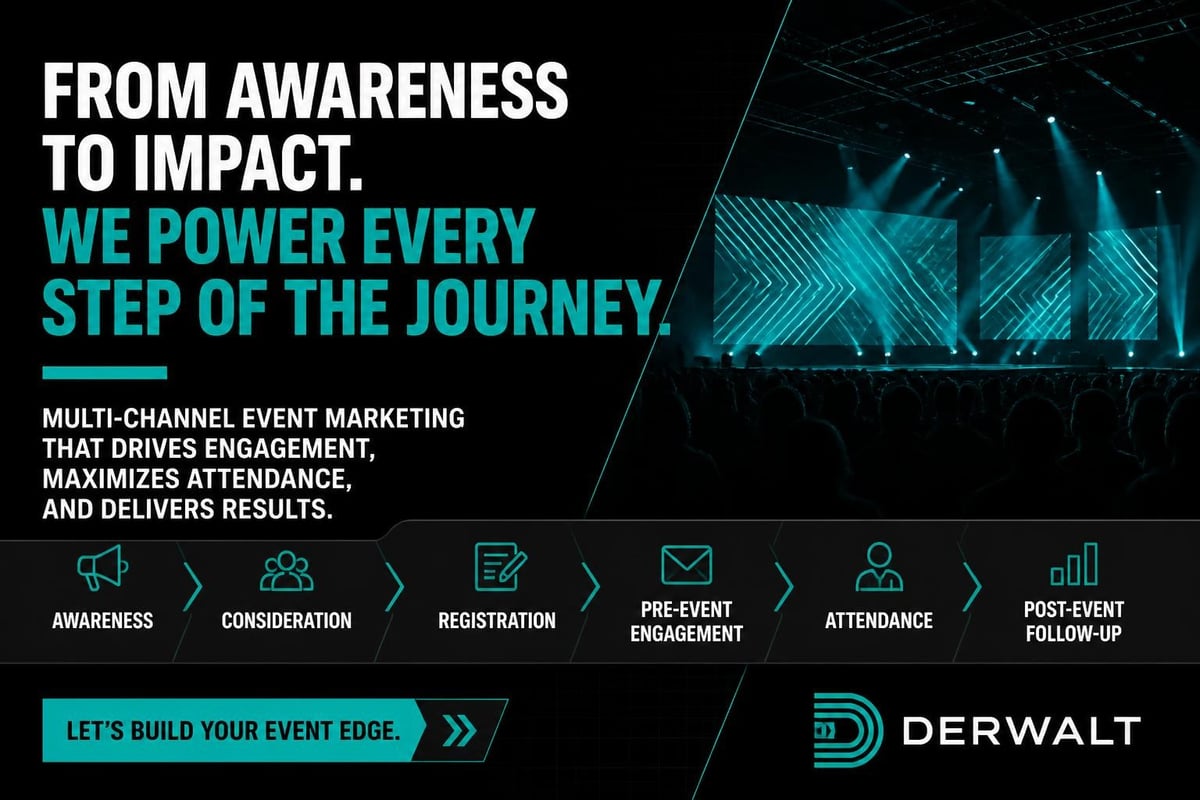
Production excellence means nothing if target audiences don't attend our event. Strategic promotion requires multi-channel marketing that builds awareness, generates interest, and drives confirmed attendance through coordinated campaigns.
Building Pre-Event Momentum
Pre-event marketing establishes anticipation and positions our event as essential for target audiences. This requires clear value propositions that articulate specific benefits attendees will receive by participating.
Research on event marketing tactics emphasizes the importance of pre-event buzz created through coordinated content releases, speaker announcements, and early-bird incentives that reward commitment.
Effective pre-event campaigns include:
- Email sequences targeting segmented audience lists
- Social media content building community engagement
- Partner promotion leveraging aligned organizations
- Influencer activation through industry thought leaders
- Content marketing demonstrating event value
Registration Systems and Attendance Conversion
Registration infrastructure must reduce friction while capturing data necessary for production planning and post-event analysis. Professional registration systems integrate with marketing automation, provide real-time capacity tracking, and support dynamic pricing strategies.
The Social Event Scheduling problem highlights how efficient scheduling and clear value propositions maximize attendance conversion. Our event requires registration experiences that communicate value, simplify commitment, and maintain engagement through the event date.
Execution Intelligence During Our Event
On-site execution separates theoretical planning from operational reality. Our event demands production teams capable of managing complex technical operations, responding to real-time challenges, and maintaining brand standards under pressure.
Production Team Structure and Coordination
Professional event execution requires clearly defined roles, communication protocols, and decision-making authority. Production teams must include technical specialists, venue coordinators, supplier liaisons, and brand guardians who collectively ensure all elements perform as specified.
Corporate event planning best practices emphasize detailed technical plans and effective communication as foundations for confident execution. When teams understand their responsibilities and possess tools to coordinate effectively, execution quality improves dramatically.
Communication systems must support real-time coordination across distributed teams. This includes radio networks for production crew, digital platforms for schedule management, and escalation protocols for addressing issues requiring immediate attention.
Risk Management and Contingency Activation
Despite thorough planning, our event faces potential disruptions requiring rapid response. Professional production teams maintain contingency plans addressing common failure scenarios-equipment malfunctions, supplier delays, weather impacts, and attendance variances.
Risk management operates on probability and impact matrices that prioritize mitigation efforts. High-probability, high-impact risks receive dedicated contingency planning, while lower-priority risks may be accepted or transferred through insurance mechanisms.
| Risk Category | Mitigation Strategy | Contingency Plan |
|---|---|---|
| Equipment Failure | Redundant systems and backup units | Rapid replacement protocols |
| Supplier Delays | Early delivery requirements | Alternative supplier relationships |
| Weather Impact | Covered contingency spaces | Schedule flexibility and communication |
| Low Attendance | Multi-channel promotion | Dynamic programming adjustments |
Brand Activation and Experiential Engagement
Our event exists to create meaningful brand experiences that influence perceptions, drive behaviors, and generate measurable business outcomes. This requires experiential design that engages attendees intellectually, emotionally, and physically.
Designing Memorable Brand Interactions
Experiential event marketing creates moments that connect brand values with personal experiences. These interactions must feel authentic, deliver genuine value, and align with attendee expectations established through pre-event marketing.
Effective brand activations balance entertainment with education, creating environments where audiences willingly engage with branded content because it serves their interests. This requires deep audience understanding and creative execution that respects intelligence while stimulating participation.
DERWALT does not simply build events. DERWALT builds the system behind successful brand experiences. That system includes creative interpretation, strategic planning, production intelligence, budget control, technical delivery, supplier management, risk mitigation, on-site execution, and post-event learning that transforms each initiative into organizational knowledge.
Measuring Engagement and Experience Quality
Our event must incorporate measurement systems that quantify attendee engagement, experience satisfaction, and business impact. These metrics inform immediate adjustments during the event and provide learning for future initiatives.
Measurement approaches include digital engagement tracking, post-event surveys, social media sentiment analysis, and business outcome correlation. Professional event producers establish baseline metrics before the event and compare actual performance against targets.
Technology Integration for Enhanced Experiences
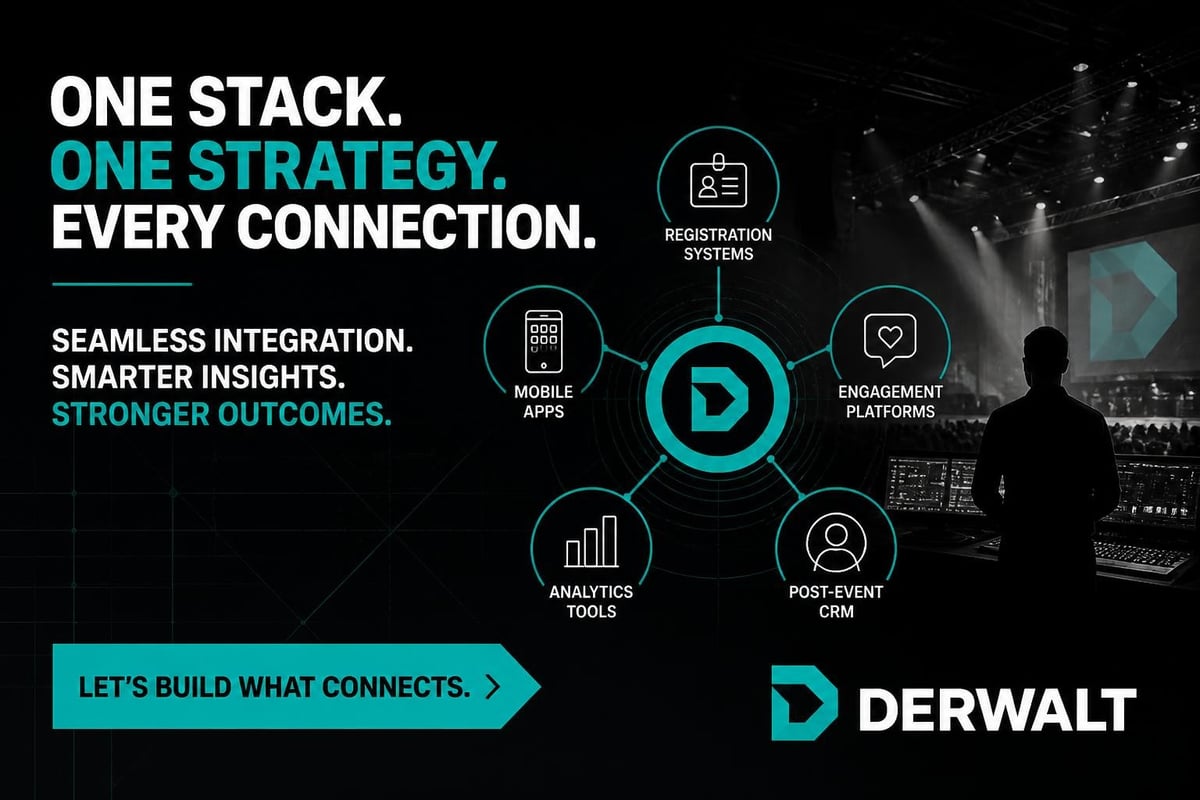
Modern events leverage technology to amplify engagement, personalize experiences, and extend impact beyond physical attendance. Our event should strategically integrate technology where it enhances rather than distracts from core objectives.
Event Technology Selection and Implementation
Technology choices must align with audience capabilities, venue infrastructure, and production team expertise. Implementing complex systems without adequate testing and staff training creates execution risk that compromises attendee experience.
According to proven event marketing tactics, defining ideal attendee profiles and building compelling value propositions increases attendance. Technology should support these fundamentals rather than replacing strategic thinking with digital novelty.
Strategic technology applications include:
- Mobile event apps providing personalized schedules and navigation
- Live polling and Q&A systems increasing session interactivity
- RFID tracking capturing movement patterns and engagement data
- Virtual attendance options extending reach beyond physical capacity
- Post-event platforms maintaining community engagement
Data Capture and Privacy Compliance
Technology integration creates data capture opportunities that inform marketing, sales, and product development. However, our event must balance data collection with privacy obligations and attendee expectations around consent and transparency.
Professional data strategies establish clear purposes for collection, maintain security protocols protecting sensitive information, and provide transparency about how data will be used. Compliance with privacy regulations isn't optional-it's fundamental to maintaining trust and legal standing.
Supplier Management and Production Partnerships
Our event relies on multiple specialized suppliers delivering coordinated services under compressed timelines. Professional supplier management ensures quality, accountability, and performance consistency across all production elements.
Supplier Selection and Contract Management
Supplier selection should prioritize reliability and production expertise over cost minimization. Organizations often select event suppliers based on price, then experience quality issues and hidden costs that exceed initial savings.
Production management services coordinate multiple suppliers through centralized communication, standardized specifications, and performance accountability. This coordination reduces miscommunication, eliminates duplicated efforts, and ensures seamless integration across production elements.
Contract terms must clearly specify deliverables, performance standards, payment schedules, and liability provisions. Ambiguous contracts create disputes that distract from production execution and potentially compromise our event quality.
Quality Assurance and Performance Verification
Quality assurance processes verify supplier performance against specifications before, during, and after our event. This includes pre-event equipment testing, on-site performance monitoring, and post-event evaluation informing future supplier decisions.
Professional production management maintains detailed supplier performance records documenting reliability, quality, responsiveness, and value delivery. These records support informed decisions about continuing relationships versus seeking alternative suppliers.
Post-Event Analysis and Organizational Learning
Our event doesn't end when attendees depart. Professional event production includes comprehensive post-event analysis that captures learning, measures outcomes, and informs continuous improvement.
Performance Measurement Against Objectives
Post-event analysis compares actual performance against objectives established during strategic planning. This includes attendance metrics, engagement indicators, brand impact measures, and business outcome correlation.
Event marketing strategy guides emphasize the importance of well-defined success metrics established before execution begins. Without clear benchmarks, post-event analysis becomes subjective opinion rather than objective assessment.
Critical post-event metrics include:
- Total attendance versus registration targets
- Session participation and engagement rates
- Attendee satisfaction scores and qualitative feedback
- Social media reach and sentiment indicators
- Business outcomes (leads generated, sales influenced, partnerships formed)
- Budget performance and cost variance analysis
Documenting Production Learning
Every event generates learning about what worked, what failed, and what should change for future initiatives. Professional organizations capture this knowledge systematically rather than relying on informal memory.
Production documentation should include technical specifications, supplier performance records, budget actuals, timeline execution, and team observations. This documentation becomes institutional knowledge that improves planning efficiency and execution quality for subsequent events.
Building Long-Term Event Strategy
Organizations that consistently deliver exceptional events don't treat each initiative as isolated. They develop long-term event strategies that build audience relationships, refine production processes, and create compounding brand value.
Creating Event Series and Recurring Initiatives
Recurring events build audience anticipation, streamline production planning, and create opportunities for continuous improvement. When our event becomes an anticipated tradition, marketing efficiency improves and attendance becomes more predictable.
Event series also enable production optimization as teams refine processes, strengthen supplier relationships, and develop specialized expertise. First-time events face learning curves that recurring initiatives eliminate through accumulated experience.
Strategic event concepts benefit from long-term planning that considers how individual initiatives contribute to broader brand narratives and business strategies. This perspective prevents short-term thinking that sacrifices strategic consistency for tactical convenience.
Developing Internal Production Capabilities
Organizations hosting regular events should develop internal production capabilities rather than remaining entirely dependent on external suppliers. This doesn't require building comprehensive in-house teams, but strategic knowledge development enables better supplier management and informed decision-making.
Internal capabilities might include event project management, technical specification development, budget planning, and supplier coordination. These competencies increase organizational independence while improving collaboration quality with external production partners.
Operational Excellence as Competitive Advantage
In competitive markets, our event quality directly influences brand perception and business outcomes. Organizations that consistently deliver exceptional experiences gain reputation advantages that reduce marketing costs and increase audience loyalty.
Operational excellence requires systematic approaches that eliminate variability, reduce risk, and ensure consistent performance. This means documented processes, trained teams, tested systems, and continuous improvement cultures that refuse to accept mediocrity.
360-degree event production expertise encompasses every element from strategic concept through post-event analysis. This comprehensive approach prevents gaps where responsibilities remain unclear and quality suffers.
Professional event production isn't about individual brilliance-it's about systematic excellence that produces reliable results regardless of personnel changes or project complexity. Organizations building these systems transform events from risky undertakings into predictable brand-building instruments.
Our event represents significant investment and considerable risk for organizations committed to delivering memorable brand experiences. Success requires strategic planning that aligns business objectives with production realities, comprehensive technical execution that eliminates avoidable failures, and measurement systems that quantify impact and inform continuous improvement. When you're ready to transform event concepts into flawless brand experiences backed by production intelligence and execution certainty, DERWALT delivers the strategic partnership and operational excellence that builds confidence from planning through post-event analysis.
Recent Comments